At 0530, with frost on the tailgate and a full shift ahead, slip on steel cap shoes look attractive for one simple reason: they are quick. No laces, no knot coming loose while you climb out of a truck, and no wrestling with wet footwear at the end of the day. But convenience is only useful if the shoe stays put, protects your feet, and survives the work. I have learned that the hard way on muddy trail crews and construction sites where a loose shoe becomes a trip hazard before lunch.
The first question is not whether a pair looks tough online. It is whether the toe protection meets the safety standard required by your job, whether the sole grips the surfaces you actually walk on, and whether the upper can handle a full week of abuse. Steel toe footwear can be dependable, but the slip-on design brings tradeoffs that are easy to miss in a product photo.
What slip-on safety footwear gets right
The best reason to choose slip-on steel cap shoes is speed. A pull tab and elastic side panel can save several minutes every morning, especially for mechanics, warehouse workers, delivery drivers, and crews moving between a truck and a jobsite. A well-shaped shoe also avoids pressure from a tongue or laces across the top of the foot. That matters after ten hours on concrete.
Steel caps offer a proven barrier against impact and compression. They are usually thinner than a bulky external toe guard, which keeps the shoe looking and moving more like ordinary footwear. Many models from brands such as Skechers Work, Dr. Martens, Caterpillar, and Blundstone use leather or synthetic uppers with slip-resistant rubber or polyurethane soles. Prices commonly run from about $60 for basic warehouse shoes to $180 or more for heavier leather models.
Do not confuse a steel cap with complete foot protection. The cap shields the toes, but it does not stop a nail from entering the sole, protect the ankle from a twist, or make a shoe waterproof. Those jobs depend on the outsole, construction, collar, and material. A shoe can have a strong toe and still be a poor work shoe.
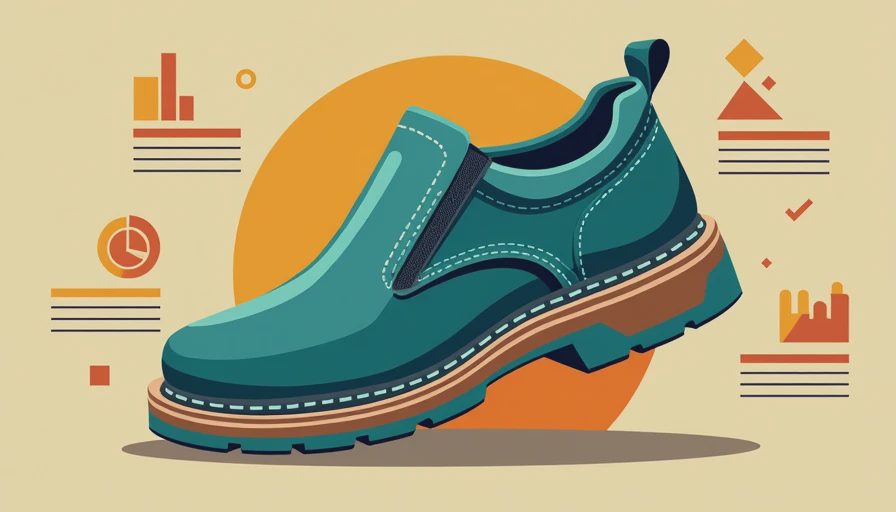
Fit is where the slip-on design earns or loses trust
A lace-up boot lets you adjust tension across the instep. Slip on steel cap shoes cannot give you that same level of control, so the heel and opening need to fit correctly from the first try. Your heel should stay seated when you walk up an incline, while your toes should have enough room to move without touching the steel cap. Try them on near the end of the day, when feet are usually a little larger.
Wear the socks you use at work. Thick wool socks can change the fit dramatically, and a tight toe box becomes more painful after several hours. Walk stairs, crouch, and push your foot forward inside the shoe. If your heel lifts more than a small amount, do not assume the shoe will magically settle into place. Elastic may relax with use, but a loose heel can create hot spots, blisters, and poor balance.
A removable insole can help with comfort, but it cannot fix a fundamentally loose shoe. Some workers use a heel grip or thicker sock, though those solutions are better for minor adjustments than a bad fit. If you need a very secure heel for ladders, uneven ground, or carrying heavy loads, a lace-up or side-zip boot is usually the safer choice.
Sole construction matters more than the toe label
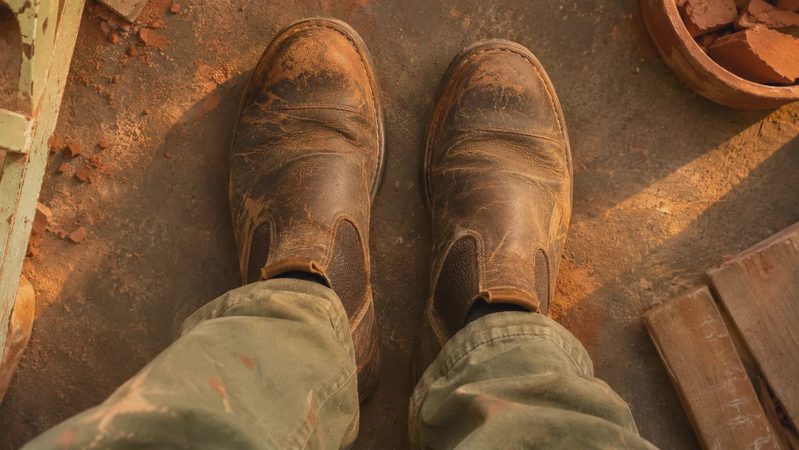
Look at the outsole before you look at the brand name. A shallow, smooth pattern can feel fine in a store and skate across wet plywood, greasy concrete, or packed mud. For indoor warehouse work, a flat rubber sole with dependable slip resistance may be comfortable and quiet. For outdoor construction or trail work, deeper lugs and a more durable rubber compound are more useful.
Pay attention to the connection between the upper and sole. Cemented shoes are often lighter and more flexible, but the bond can fail after repeated soaking, bending, and exposure to chemicals. Goodyear welted footwear is generally easier to resole, although it can feel stiffer and cost more. Neither construction automatically makes a shoe safe. Inspect the stitching, edge bonding, and heel shape instead of trusting a marketing phrase.
For wet work, search for a clearly stated waterproof membrane or treated leather, then inspect the opening. Water can run straight over the collar of a low slip-on and soak your socks even when the lower shoe is sealed. Waterproofing also reduces breathability, so a hot indoor shift may favor a breathable mesh model rather than a sealed leather shoe.
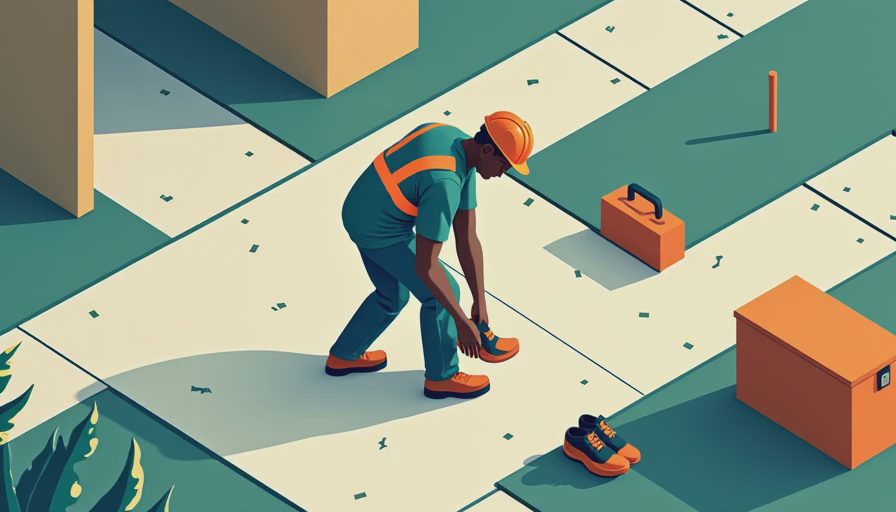
Steel, composite, and the heat question
Steel is strong, widely available, and usually less expensive than composite protection. It can also conduct temperature, so a steel toe may feel colder in winter and warmer around hot equipment. Composite caps are lighter and do not conduct temperature in the same way, but they can take up more space inside the toe box and often raise the price. Aluminum caps are another option, though they are less common in basic work shoes.
For most jobs, the label should show the applicable ASTM safety rating rather than simply saying “safety toe.” Look for protection appropriate to impact and compression hazards, and confirm whether your employer requires additional features such as electrical hazard resistance or puncture resistance. An electrical hazard rating does not mean the shoe is safe around every electrical situation, and no safety toe replaces lockout procedures or jobsite training.
Do not wear ordinary slip-ons around cutting operations, open flame, or severe heat just because the toe is steel. Leather can burn, synthetic materials can soften or melt, and a low shoe leaves more of the lower leg exposed. Wildland fire and many industrial heat tasks call for purpose-built footwear, not casual shoes with a safety cap.
How to test a pair before trusting it
Give new slip on steel cap shoes a short test before committing to a long shift. Wear them around the house for an hour, then walk on stairs and a hard surface. Check for pressure at the cap, rubbing behind the heel, and any side-to-side movement. Next, use them for a short work period rather than a twelve-hour shift. A shoe that feels acceptable for twenty minutes can expose a hot spot by hour four.
Inspect the footbed after each early wear. Excessive creasing directly behind the steel cap can signal that the shoe is too short or that your foot is sliding forward. Check the outsole for uneven wear and look inside for crushed lining. If the sole is already separating or the heel has developed a lean, return the pair while you can.
Maintenance is simple but matters. Let wet shoes dry at room temperature, remove the insole, and brush off grit before it works into the seams. Do not put leather footwear against a heater; rapid drying can stiffen and crack it. Rotate between two pairs when possible. Even a $90 shoe lasts longer when it gets a full day to dry between shifts.
My field verdict on slip-on work shoes
Slip on steel cap shoes earn a place on serviceable indoor jobs, light construction, shop work, and driving-heavy shifts when the fit is secure and the outsole matches the floor. They are convenient, often comfortable, and easier to put on than a lace-up boot. Skechers Work can make sense for workers who prioritize cushioning, while leather-focused brands such as Blundstone or Dr. Martens suit people who want a more durable upper and are willing to accept a break-in period.
I would not choose them for steep ground, frequent ladder work, deep mud, heavy demolition, or fireline duty. In those conditions, the missing lace adjustment and lower ankle coverage become real limitations. A properly fitted lace-up boot with a safety toe is slower at the tailgate but more dependable when the ground turns ugly.
The barrel does not lie, and neither does a twelve-hour shift. Judge the shoe by heel control, sole grip, toe room, construction, and how your feet feel at the end of the day. If those details line up, slip on steel cap shoes can be a practical tool rather than a shortcut. Worn in fire. Proven in dirt.