Chelsea work boots make sense when you need a boot that pulls on fast for shop work, ranch chores, or a day moving between the truck and a jobsite. Start with the protection your employer requires, then choose for fit and footing. Don't assume every slip-on with a thick sole is a safety boot, and don't assume one belongs on a wildland fire line.
For a starting shortlist, look at Blundstone's Work series if you want a pull-on work boot with safety-toe options. Consider Redback's work boot range for general outdoor and shop use, or the Ariat WorkHog Chelsea line if you want a work-focused option from a brand known for western and jobsite footwear. Each has different versions, so match the exact model's toe, sole, and safety markings to your job before ordering. These are starting points, not field-test verdicts.
Where chelsea work boots make sense
The appeal is simple: elastic side panels replace laces, so there's less hardware to fuss with when you're in and out of the house, truck, or shop. A smooth upper can also be easier to brush clean than a tongue full of lace hooks. For ranch work or warehouse shifts, that convenience can matter every single day.
The trade-off is adjustment. You can't tighten the ankle or fine-tune pressure over the instep the way you can with laces. The elastic has to hold the boot securely while still letting your foot through the opening. If your heel lifts badly or the boot pinches across the top of your foot, don't count on a week of wear to fix it.
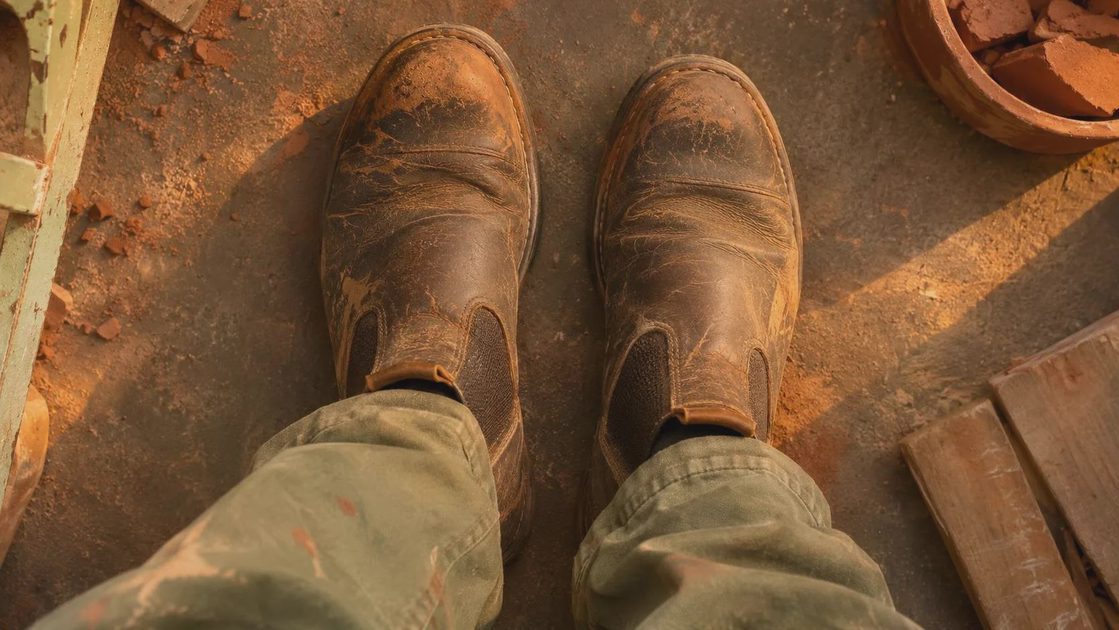
Chelsea work boots also leave the elastic exposed to mud, moisture, abrasion, and heat. Leather care won't restore stretched or damaged elastic. Look closely at the stitching around each panel when you inspect a pair, and check whether the maker or a local cobbler can repair it before you spend a premium.
Check the safety label, not the silhouette
A safety toe and a protective-looking toe are different things. If your site requires impact and compression protection, look for the applicable ASTM F2413 marking on the boot and check it against your employer's requirements. Steel and composite toes can both meet a standard when the specific boot is certified; neither material makes every boot compliant by itself.
Electrical hazard protection, puncture resistance, and metatarsal protection are separate questions. Read the full markings and product documentation rather than assuming one safety feature includes the others. Electrical hazard footwear is a secondary safeguard, not permission to work on energized equipment without the proper procedures and protective equipment. Wear, moisture, and contamination can also reduce protection.
For chelsea work boots used around vehicles or machinery, check the outsole's stated slip-resistance rating or test method, if provided. A chunky lug isn't proof that a sole will grip an oily shop floor. Likewise, a smooth shop sole may pack less mud into a cab but struggle on loose dirt. Match the tread to the surface where a slip would hurt most.
Waterproofing deserves the same scrutiny. Water-resistant leather can shed some moisture without making the whole boot waterproof. A waterproof construction may help in wet grass or puddles, but water can still enter over the top. Check the manufacturer's description, especially around the elastic panels, and don't confuse a waterproof claim with a guarantee of dry feet all shift.
Fit them for a full workday
Try chelsea work boots with the socks you actually wear on shift, preferably after you've been on your feet for a while. Stand up, walk, squat, and step onto a stair or a stable raised surface. Your toes need room to move without rubbing the front or sides, particularly inside a safety-toe cap that won't stretch to accommodate them.
A little heel movement can occur in a pull-on boot, especially when it's new, but repeated slipping or rubbing is a warning. Walk long enough to feel whether your heel settles or keeps lifting. If the boot fits only after you curl your toes to hold it on, the fit is wrong. Try another size, width, or last rather than piling in thick socks as a permanent fix.
Pay attention to the instep, too. The boot should be snug enough to stay put without creating a pressure point across the top of your foot. Removable insoles can change the fit, but replacing one may affect the boot's certified configuration. If safety compliance matters, ask the manufacturer before swapping it.
Fire line is a different assignment
I would not choose chelsea work boots for wildland fire duty unless the exact pair meets the applicable agency requirements and your supervisor approves it. Fire assignments can specify boot height, construction, sole characteristics, and other details that a general work boot may not meet. Rules vary by agency and assignment, so check the actual requirement before buying or showing up for inspection.
Elastic side panels are another reason to ask hard questions around heat and embers. Don't treat a leather upper as proof that every component is suitable for fire exposure. A backyard burn test cannot establish compliance or tell you how a boot will protect you in a real incident. Buy to the assignment standard, not a marketing photo of somebody standing near flames.
For nonfire work involving welding, cutting, or hot debris, ask your safety lead about the specific hazards and required footwear. Sparks can enter an opening or damage components; pants length, protective coverings, and the task itself matter too.
Make the pair last
At the end of a muddy shift, brush off grit and let the boots dry at room temperature in a ventilated spot. Pull removable insoles to dry separately. Don't park wet leather against a heater or use an open flame: excessive heat can damage leather and adhesives.
Condition leather according to the manufacturer's instructions, keeping treatment off the elastic unless the maker says otherwise. Too much product can change the leather's feel and appearance without making the boot waterproof. Inspect the outsole for worn tread or separation, and watch for cuts in the upper, loose stitching, and elastic that no longer pulls the boot close.
Finally, ask about resoling before you buy. Some construction methods and sole designs are more repairable than others, and not every cobbler will take on every boot. Compare the repair estimate with replacement cost and the condition of the upper. Chelsea work boots earn their place when they fit your feet, meet the site's rules, and still have enough tread under you at the end of the shift.