A wet morning, a slick ladder, and eight hours of concrete will tell you more about a work boot than a clean product photo ever will. The wolverine men's floorhand waterproof steel toe work boot is built for that kind of shift: hard surfaces, changing weather, and jobs where your feet take the punishment first. I am looking at it the way I look at any piece of field gear: what does it protect, where does it compromise, and will it still be useful after the shine is gone?
This is not a boot for every assignment. Steel toe protection, a waterproof build, and a work-oriented outsole give it a clear purpose. It makes more sense for construction, warehouse work, utility maintenance, landscaping, and general outdoor labor than for long-distance mountain travel or a wildland fire line. The distinction matters. A boot can be tough without being suitable for every hazard.
What the Floorhand boot is designed to handle
The wolverine men's floorhand waterproof steel toe work boot combines three practical features: a protective steel toe, waterproof construction, and a lugged rubber outsole intended for traction on job-site surfaces. The steel toe is useful where falling tools, lumber, equipment, or compression hazards are part of the day. It is not a substitute for paying attention around machinery, and it does not make a boot puncture-resistant or electrical-hazard rated unless the specific model carries those markings.
Waterproofing is most valuable when you are moving between mud, rain, wet grass, and indoor floors throughout a shift. A waterproof membrane or sealed construction can keep outside moisture from reaching your socks, but water can still enter over the collar if you step into deep water. The tongue, eyelets, and boot opening remain the weak points on almost every waterproof work boot.
The outsole is just as important as the upper. A deep tread should bite into packed dirt and rough concrete, while a broad heel helps when climbing steps or standing on a ladder. On oily or icy surfaces, however, no tread removes the need for deliberate foot placement. Traction claims are useful information, not permission to move carelessly.

Fit, break-in, and all-day comfort
The wolverine men's floorhand waterproof steel toe work boot should be fitted with the socks you actually wear on the job. Thick wool or synthetic work socks can change the fit more than half a shoe size, especially around the toe box. Put both boots on late in the day, when feet have expanded, and walk down a hard floor before deciding. Your toes should not touch the steel cap when descending stairs, and your heel should stay mostly planted without crushing the ankle collar.
Expect some break-in time. Full-grain leather or substantial synthetic uppers often feel stiff for the first several shifts. That stiffness is not automatically a defect, but hot spots are a warning. If the boot rubs the heel on day one, use shorter wear periods and adjust the lacing before committing to a ten-hour shift. Blisters are not a badge of toughness; they are a preventable work stoppage.
The right insole can change the experience. A worker standing on concrete may benefit from firmer arch support and heel cushioning, while a person walking over uneven ground may prefer a more stable, less soft footbed. Do not install a thick aftermarket insole if it lifts your foot into the steel toe. Reduced toe clearance can create pressure and defeat the point of a properly fitted safety boot.
Waterproofing in real working conditions
The wolverine men's floorhand waterproof steel toe work boot is most useful when the job involves repeated contact with ordinary wet conditions rather than prolonged submersion. Think rain-soaked framing sites, irrigation work, damp loading docks, and morning rounds through wet grass. The best test is simple: wear the boots through a wet shift, then inspect the socks and the inside of the boot. Dampness around the toe can come from a leak, while moisture concentrated around the collar may be sweat or water running down your leg.
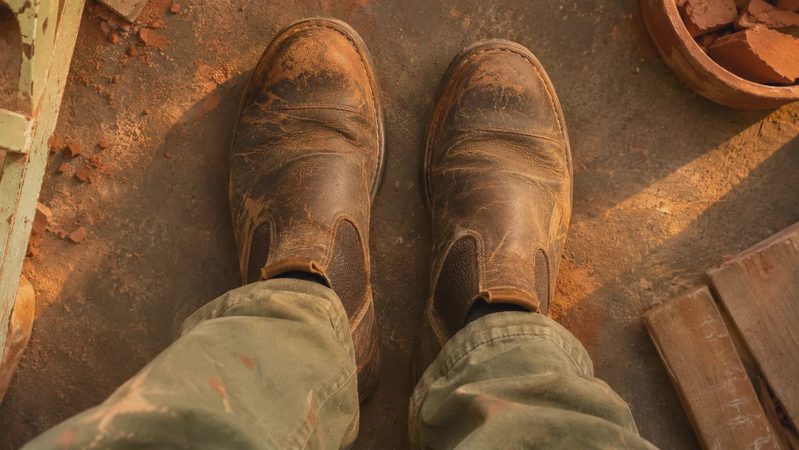
Care determines how long that protection lasts. Brush off dried mud instead of leaving grit packed around the welt and outsole. Let the boots dry at room temperature, away from a wood stove, heater, or truck exhaust. Excessive heat can stiffen leather, weaken adhesives, and distort the waterproof barrier. Remove the insoles so trapped moisture can escape overnight, and rotate into a second pair if your work keeps you outside every day.
A waterproof boot is not necessarily a breathable boot. On warm summer shifts, your feet may still sweat. Change socks at lunch when conditions allow, and avoid cotton if your work regularly involves wet weather. Dry feet are more comfortable and less likely to develop hot spots.
Safety details worth checking before purchase
Before ordering the wolverine men's floorhand waterproof steel toe work boot, read the exact product label rather than relying only on a retailer headline. Look for the safety markings required by your employer, including the relevant ASTM designation for impact and compression protection. Some job sites also require slip resistance, electrical hazard protection, metatarsal protection, or a specific color and height. A steel toe alone does not satisfy every workplace rule.
Check the return policy as carefully as the size chart. Work boots often feel different across brands, and a half-size change can decide whether you finish a shift comfortably. Buy from a seller that allows unworn returns, inspect the stitching and outsole immediately, and walk indoors before exposing the boots to mud. Keep the packaging until the fit is settled.
Price is another practical calculation. If the pair costs roughly $100 to $150, compare that expense with the cost of replacement socks, lost work time, and foot pain from a poor fit. A cheaper boot is not a bargain if it fails early, but a higher price does not guarantee better traction or comfort. Look at the construction and the job requirements first.
Who should wear this boot?
The wolverine men's floorhand waterproof steel toe work boot fits a worker who needs dependable protection for routine job-site exposure. Construction crews, warehouse employees, delivery workers, maintenance staff, ranch hands, and landscapers are the natural audience. It offers more protection than a casual hiking shoe and usually more weather resistance than a basic leather sneaker-style work shoe.
It is less convincing for technical hiking, extended backcountry patrols, or fire assignments requiring a certified wildland boot. Steel toe caps can add weight, waterproof membranes can run warm, and standard work outsoles are not the same as a purpose-built logger or fire boot. For those jobs, match the boot to the hazard instead of forcing one pair to do everything.
I would also be cautious if your shift requires frequent kneeling, climbing, or deep mud. A tall boot can offer more support and coverage, while a lighter low-cut safety shoe may be better for constant indoor walking. The correct choice depends on the ground beneath you and the rules above you.
Field verdict and care plan
The wolverine men's floorhand waterproof steel toe work boot earns a Serviceable rating on the Fire Line Scale for general wet-weather work. It has the right feature set for ordinary job-site protection, but buyers should confirm the exact safety certification, fit, and return terms before putting it through a full shift. Do not confuse waterproofing with submersion protection or a steel toe with complete job-site protection.
Wear it around the house first, then use it for a short shift before trusting it for ten hours. Check your socks, heel, toe clearance, and tread after each early wear. Clean the upper, dry the boot slowly, and replace worn insoles before they affect your stance. If the outsole begins separating, the waterproof liner leaks, or the toe cap creates persistent pressure, stop treating the boot like a break-in project.
The barrel does not lie, but neither does a long shift. Buy this model for the work it is built to do, not for a promise that one boot can cover every trade and terrain. Worn in fire. Proven in dirt.