The most comfortable steel toe boots are the ones that give your toes room, hold your heel steady, and meet the safety requirements of your job. For a starting shortlist, look at the Timberland PRO Pit Boss for general construction, the KEEN Utility Pittsburgh for workers who want a roomier-feeling toe area, and the Thorogood American Heritage steel toe line for people who prefer a traditional moc-toe work boot. Try the exact steel toe version before committing: a good boot on someone else's foot can be a miserable boot on yours.
These are options to investigate, not field-test verdicts. Fit, available sizes, and features vary by model, so check the product label and your employer's requirements before ordering.
Where to Start With the Most Comfortable Steel Toe Boots
Timberland PRO Pit Boss is a sensible place to start if you need a straightforward safety boot for construction or shop work. Look at the particular version's sole and safety markings rather than assuming every Pit Boss listing meets the same requirements. If you spend the day on ladders, pay attention to how the sole and heel feel on a rung.
KEEN Utility Pittsburgh is worth trying if your toes tend to feel crowded in conventional work boots. Its shape may suit some wider forefeet, but toe-box shape and actual width aren't the same thing. Try your usual size and width first, then compare another width if available. Don't size up solely to escape pressure at the sides; extra length can let your heel slide.
Thorogood American Heritage steel toe boots are an option for someone who likes the feel and look of a traditional moc-toe boot. Some versions use a wedge sole, which gives you a broad contact area underfoot. That can be appealing on flat floors, though a shallow tread may not be your first choice for deep mud. Check the exact sole on the pair you're considering.
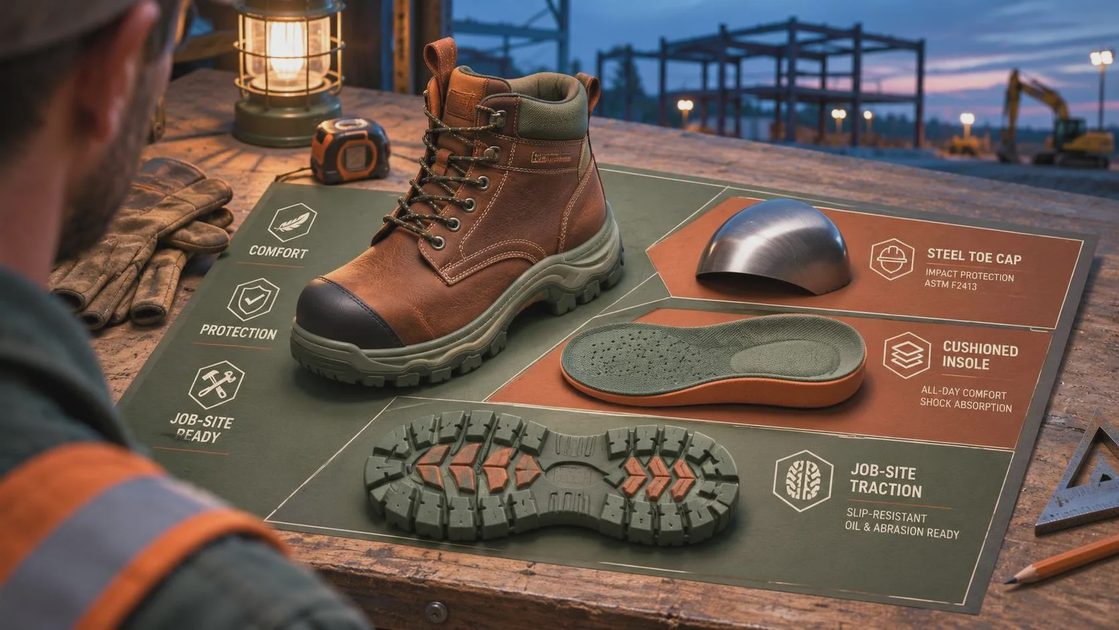
None of these names settles the question of comfort. Your arch, instep, socks, and work surface matter more than a ranking on a box. If you can't try a pair locally, check the return policy and wear it indoors before taking it to the jobsite.
Fit the Steel Cap Before Anything Else
A steel toe cap doesn't stretch to make room. Stand up, lace both boots, and check that your toes can spread without pressing against the sides or top of the cap. Walk downhill on an incline if the store has one. Your toes shouldn't strike the front, and the edge of the cap shouldn't bite when the boot bends.
A little movement at the heel can happen in a new, stiff boot, but repeated rubbing is a warning. Try adjusting the laces before changing sizes. If your foot still lifts enough to rub with each step, look at a different width or a different boot shape. Blisters aren't a break-in plan.
Try boots later in the day, when your feet may be a little larger than they were at breakfast. Wear the socks you actually take to work. If you use an orthotic or a replacement insole, bring it along and check that your foot still has enough room beneath the toe cap. Don't stack a thick insert on top of the existing footbed without checking the fit.
A boot can feel soft in the store and still put pressure on the wrong spot. Spend time standing, squatting, and walking on a hard surface. Check for a tight band across the instep and a seam that rubs your ankle. Leather may soften with wear; a hard safety cap won't change shape to fix a bad fit.
Match the Sole and Safety Label to the Job
Concrete, mud, roofing, and ladder rungs ask different things of a sole. For long hours on flat concrete, start with a sole that feels stable and has enough cushioning for your stride. On loose soil or mud, examine the tread depth and spacing; a smooth wedge can pack up or lose purchase where a more defined tread helps.
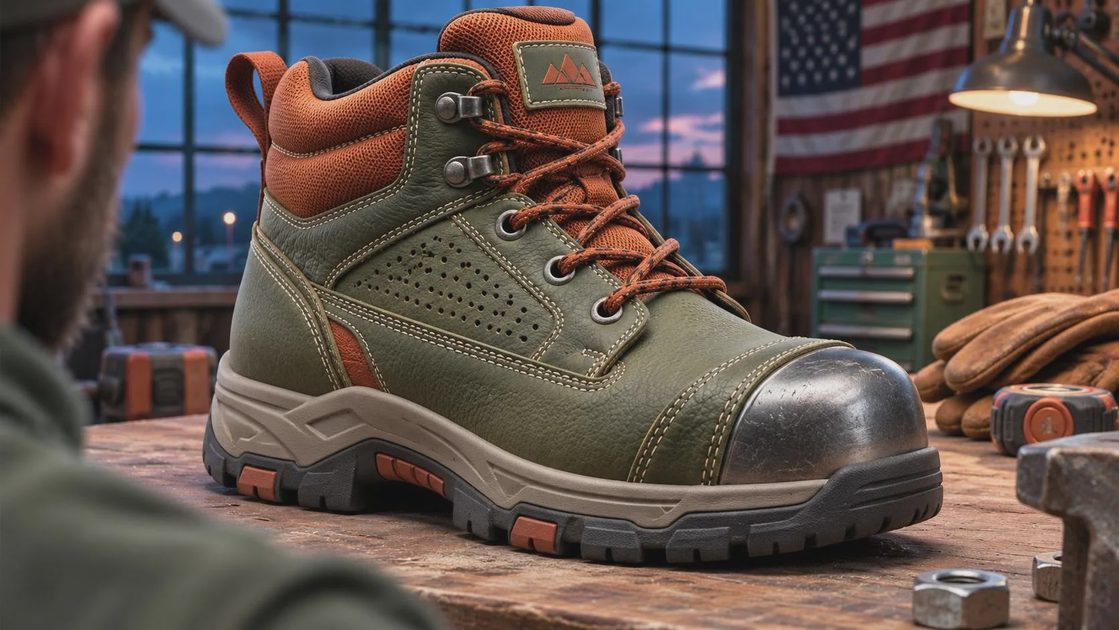
For ladder work, look for a defined heel and a stable feel under the arch, then follow your employer's footwear rules. No tread pattern makes a boot slip-proof on every wet, oily, or icy surface. Keep the soles clean enough that the tread can do its job, and replace boots when the tread is badly worn or the sole is separating.
Read the safety label inside the boot and compare it with the requirement for your site. ASTM markings identify the applicable protective footwear standard and may include designations for hazards such as impact, compression, electrical hazard, or puncture resistance. A steel toe alone doesn't mean the boot has every one of those protections. Ask your safety supervisor which markings are required if the rule isn't clear.
Electrical-hazard footwear is not a substitute for safe electrical work practices. Its protective properties depend on condition and environment, and wear or contamination can compromise them. Treat the label as one part of the safety system, not permission to ignore the rest.
Break-In, Weather, and Replacement
Start with short indoor wear, then build up gradually if the fit is right. Flex the boot naturally as you walk, but don't soak it or use high heat to force a faster break-in. Those shortcuts can damage leather and adhesives. If the steel cap causes pressure from the start, exchange the boots instead of hoping a week of shifts will solve it.
Waterproof construction can help in wet grass and slush, but a waterproof lining doesn't make a boot immune to water coming in over the top. It can also feel warmer than an unlined boot. For hot, dry work, consider whether breathability matters more than a membrane. For cold work, leave room for your sock without compressing your toes.
Rotate footwear when practical and let damp boots dry at room temperature. Pull removable insoles out to speed drying, and brush off mud before it hardens around the stitching. Condition leather as the manufacturer directs; too much product can soften it excessively or affect its finish.
Replace a pair when the protective toe is damaged, the sole is coming apart, or the tread no longer gives dependable footing. A new insole can refresh cushioning, but it won't repair a crushed cap or a failed sole. And for wildland fire, don't assume any steel toe work boot is approved: check the agency or employer's current footwear requirements before heading to the line.