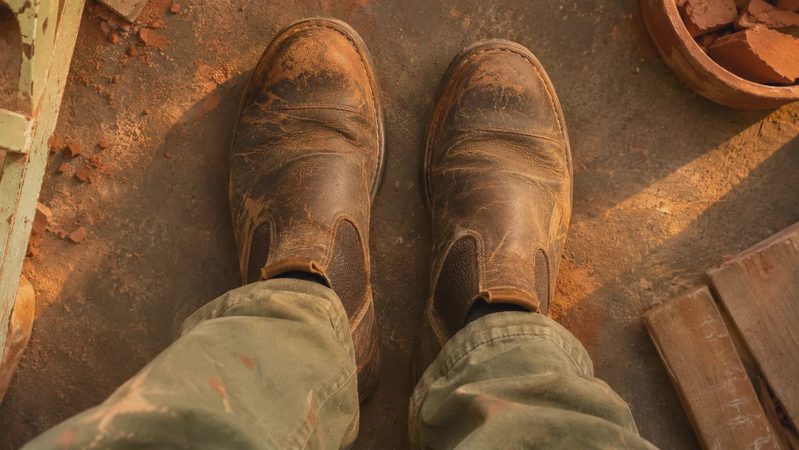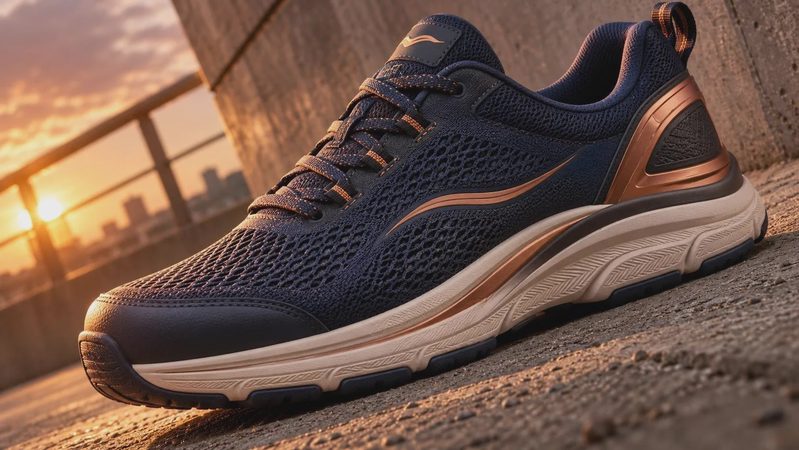
At 0530, when the truck is frosted and the jobsite mud is stiff enough to hold a boot print, composite vs steel toe is not a debate for a catalog page. It comes down to what your shift throws at your feet: falling tools, rebar, cold weather, ladders, wet ground, and twelve hours of walking. I have worn both types on fire crews, trail work, and construction sites. Neither material wins every round. The right safety toe is the one that fits your work, your weather, and your actual boot.
What separates composite and steel toes
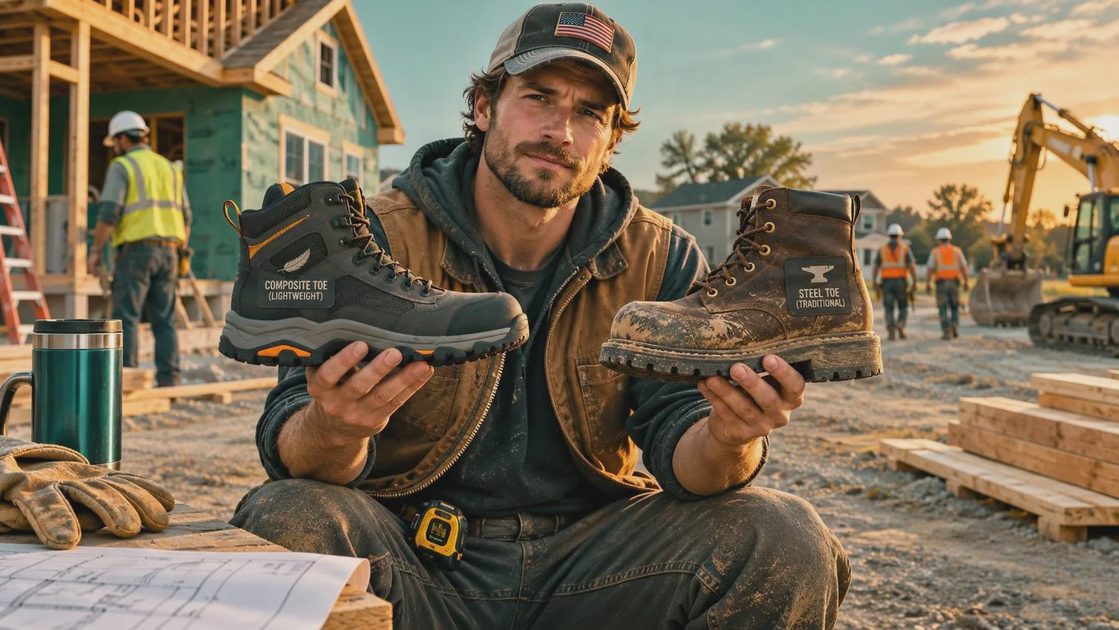
Steel is the old standard for a reason. A properly made steel toe provides strong impact and compression protection, and manufacturers have decades of experience building it into work boots. Steel can be thinner than some nonmetallic designs, which leaves useful room inside a well-shaped toe box. It is also usually the lower-cost option. A dependable steel-toe boot from brands such as Timberland PRO, Wolverine, or Caterpillar often lands around $100 to $180.
Composite toes use materials such as carbon fiber, fiberglass, Kevlar, or dense plastic. The exact formula depends on the manufacturer. They contain no metal and are often lighter, though the whole boot matters more than the toe cap alone. A thick wedge sole, waterproof membrane, or heavy shank can erase any weight advantage. Composite models commonly cost $130 to $250, with premium versions running higher.
Both types should be tested to the applicable ASTM safety standard for impact and compression. A safety toe is not automatically a puncture-resistant boot, and neither material makes a boot slip-resistant by itself. Read the complete label. Look for the ratings that match your job rather than assuming a familiar brand name covers every hazard.
Composite vs steel toe for cold and wet work
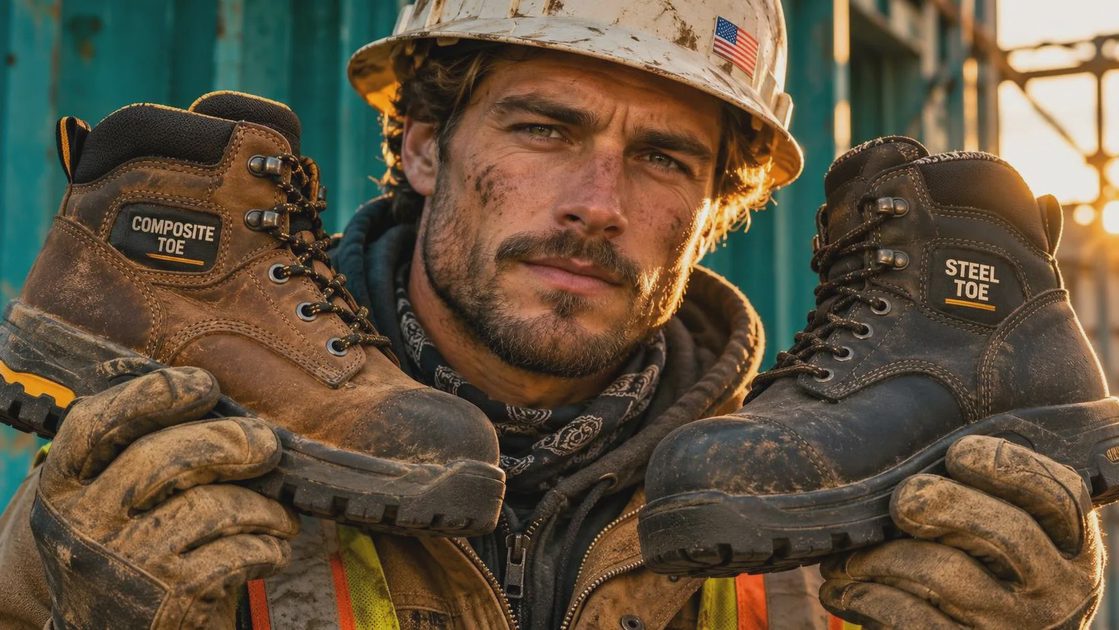
Cold is where composite toes earn their keep. Steel conducts temperature more readily than nonmetallic materials, so a steel cap can feel colder during long winter exposure. The difference is not magic insulation; your socks, boot liner, fit, and time standing still matter more. Still, a composite toe is a sensible choice for snowplow operators, utility crews, and outdoor workers who spend hours in freezing conditions.
Composite also will not set off a metal detector, which can matter at airports, courthouses, secure plants, and some industrial facilities. That convenience is real, but it should not outrank safety. Removing your boots for screening is a minor nuisance compared with wearing a toe that does not suit the work.
For wet jobs, focus on construction rather than toe material. A steel-toe boot with a sealed waterproof membrane can keep you drier than a poorly made composite boot. Check the gusset, tongue, welt, and drainage. In muddy country, I would rather have a well-fitted steel boot with a trustworthy outsole than a lightweight composite boot that lets water in through the collar by lunch.
Electrical hazards require a closer look
Here is where sales copy gets people in trouble. Composite does not automatically mean electrical hazard protection. Steel does not automatically mean the boot is unsafe around electricity. Electrical hazard protection is a separate footwear rating, and the boot must be constructed and labeled for that purpose.
A lineman or electrician should check the marking on the boot and follow the employer’s hazard assessment. The outsole, insole, moisture, and boot condition all affect performance. A damaged or soaked boot is not something to trust around energized equipment. Even a boot carrying an electrical hazard rating is not a substitute for lockout procedures, insulated tools, or the required personal protective equipment.
The same rule applies to puncture protection and metatarsal guards. If you work around scrap, nails, demolition debris, or heavy machinery, inspect the full safety package. The toe cap protects the front of the foot; it does not cover every way a jobsite can hurt you.
Fit matters more than the material
The best answer in the composite vs steel toe argument is the boot you can wear for a full shift without your toes hitting the cap. Your longest toe needs clearance in front, and your forefoot needs room to spread without pressure across the safety cap. Try boots on late in the day, when feet are slightly swollen. Wear the socks you use at work, then walk stairs, squat, and kneel.
Pay attention to pressure points. If the cap presses on the top of your toes in the store, break-in will not fix the shape. If your heel lifts substantially, you may develop blisters before the leather softens. A safety toe should feel secure, not like a metal or plastic box clamped around your foot.
Different brands shape their boots differently. Red Wing often offers substantial leather work boots with structured support. Keen Utility is known for roomier toe shapes on many models. Thorogood and Danner offer several traditional work and logger designs. Do not buy a brand because another worker swears by it; buy the shape that matches your foot and the last you can actually walk in.
How I would choose for common jobs
For indoor construction, warehouse work, and general maintenance, steel is usually the practical value. It provides proven protection, costs less in many cases, and is easy to find in local stores. Pick a composite toe when cold exposure, frequent metal screening, or a strict nonmetallic requirement makes those advantages useful.
For utility work, inspect the electrical hazard rating first, then choose the toe material. For roofing, ladders, and long days on concrete, outsole grip, flex, and weight may matter more than whether the cap is steel or composite. For logging, demolition, and heavy equipment work, look for the complete package: safety toe, puncture resistance where required, ankle support, and an outsole suited to loose ground.
Fireline work deserves caution. A safety toe is not a wildland firefighting boot, and many synthetic components can soften or fail under heat beyond their intended rating. Use the boot specified by your agency or employer. A toe cap designed for falling objects is not proof that the boot belongs near flame, hot ash, or engine exhaust.
A field checklist before you buy
Start by writing down the hazards you face instead of shopping by color or logo. Confirm the required ASTM markings and any employer policy. Decide whether cold, metal screening, or electrical work justifies composite. Then compare boot weight in your size, because listed weights often use a different size or a single boot.
Next, check the return policy and try the boots indoors with work socks. Walk for fifteen minutes. Test the toe box, heel hold, arch support, and ankle flex. Look closely at stitching, outsole bonding, tongue construction, and the transition between the upper and sole. A $160 boot that fails at the welt after one muddy season is not a bargain; a $120 pair that stays comfortable and intact for two seasons has earned its pay.
Replace boots when the sole is worn smooth, the cap is exposed, the upper is split, or the boot no longer protects as designed. Do not drill, cut, or modify the safety toe. The barrel does not lie about careless repairs, and neither does a twelve-hour shift.
The short answer in composite vs steel toe is simple: choose steel for affordable, proven general protection, and choose composite for lighter nonmetallic construction and better cold-weather comfort. Verify the ratings, fit the boot to your foot, and match the whole design to the hazard. Worn in fire. Proven in dirt.