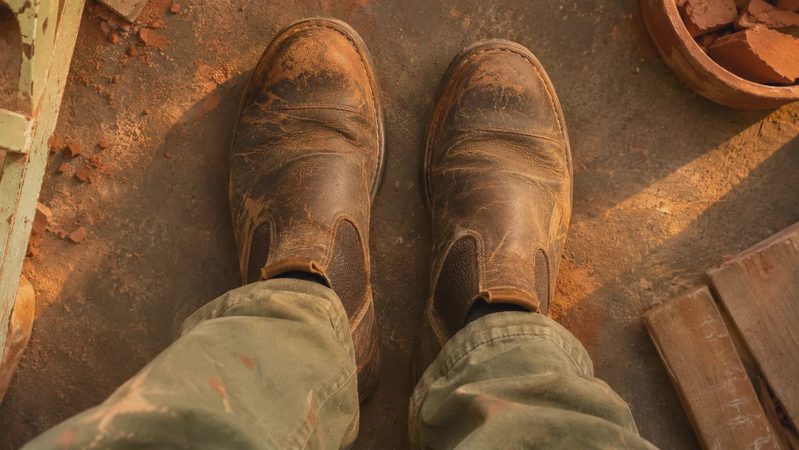
A boot marked astm f2413 meets a safety footwear specification covering protective toe performance, with additional protections identified by codes on the label. It does not mean the boot protects against every jobsite hazard. Read the whole label, match the codes to your work, and check your employer’s requirements before you put money down.
For a construction site with falling-material hazards, start with the impact and compression markings. For electrical work, the distinction between an electrical hazard rating and a conductive or static-dissipative rating matters just as much. For wildland fire, a safety toe alone tells you almost nothing about whether the boot meets your agency’s fireline requirements.
What astm f2413 covers
ASTM F2413 is a specification for protective footwear. It sets performance requirements for footwear with protective toes and includes provisions for other hazards when the manufacturer claims those protections. The related ASTM F2412 standard describes test methods used to assess protective footwear.
The label typically identifies the applicable edition of the specification, followed by codes for the protections the footwear meets. Requirements and marking details can vary by edition, so read the actual label and check the manufacturer’s explanation for that boot. A product page saying “safety toe” without the standard and ratings is not enough to confirm what you are buying.
The toe protection is tested for impact and compression. That means resistance to specific laboratory test conditions, not a promise that your toes will survive any dropped beam or crushing load. The protective cap also does not cover every inch of your foot.

Steel, composite, and other protective toe materials can meet the standard. The material alone does not tell you whether a boot passes: the finished footwear needs the appropriate marking. Pick the fit and features you need, then verify the rating on the pair.
How to read an astm f2413 label
Look inside the boot, often on the tongue or lining, for the manufacturer’s safety footwear label. It may also be printed elsewhere on the footwear. The following common codes tell you what to look for; not every boot carries every marking.
I indicates impact resistance, and C indicates compression resistance. You may see these as I/75 and C/75. They refer to standardized test classifications, not the number of pounds you can safely drop on a boot or the load you can stand under.
Mt indicates metatarsal protection, which covers part of the upper foot behind the toes. A protective toe is not a substitute for a metatarsal guard when the job calls for one. Check how the guard sits when you kneel and climb; it needs to fit without shifting uncomfortably.
PR indicates puncture resistance underfoot. That is useful where sharp debris is a concern, but it is not puncture-proof armor. The test cannot represent every nail, screw, sharp edge, or angle of penetration you might encounter. The upper and sides of the boot are not protected just because the sole has this marking.
Other markings can include CS for chainsaw cut resistance and specific electrical classifications. Do not assume a code is present because the boot looks rugged. If you cannot read the label or a seller cannot confirm the rating, ask for documentation before ordering.
Electrical markings are not interchangeable
An astm f2413 EH marking identifies footwear designed to provide a secondary source of protection against certain electrical hazards under specified test conditions. It is not permission to work on energized equipment, and it does not replace required electrical protective equipment, safe work practices, or your employer’s procedures.
Moisture, contamination, wear, and damage can reduce electrical insulating performance. A boot that carried an EH marking when new should not be treated as a reliable barrier regardless of its condition. Inspect it and follow your workplace’s replacement rules.
Conductive footwear, marked Cd, is intended to help reduce static electricity buildup. Static-dissipative footwear, marked SD, is designed to control electrical resistance within a specified range. These are different jobs from electrical hazard protection. A workplace handling sensitive electronics or combustible materials may specify one type; do not swap it for another because both descriptions mention electricity.

The whole system matters, including the floor and workplace procedures. Ask the safety manager which marking is required for your task. If you move between jobs with different electrical hazards, get a clear answer before assuming one pair covers both.
What astm f2413 does not tell you
The standard is not a general rating for slip resistance, waterproofing, insulation, heat resistance, or fireline suitability. A manufacturer may make separate claims about those qualities, but you need to check those claims and any applicable workplace standard separately.
On a wet roof, tread design and the surface underfoot matter. In mud, a deep lug can help shed material, but it is no guarantee against a fall. For chainsaw work, look for the specific protection your employer requires rather than assuming a safety toe handles the saw hazard.
Wildland firefighters have another layer to check: agency, crew, and incident footwear requirements. Those can address boot height, construction, and other characteristics beyond a protective toe. Confirm the applicable requirements before buying, especially if you work on federal incidents or under a contract. A heavy-looking logger boot is not proof of compliance.
Fit, inspection, and replacement
Even a correctly marked boot can make a long shift miserable if the cap crowds your toes. Try boots on with the socks you intend to wear, preferably later in the day when your feet may be more swollen. Walk downhill if the store has a ramp, crouch, and climb a few steps. Your toes should not jam against the cap, and your heel should not slide excessively.
Inspect footwear before work. Look for a cracked or exposed toe cap, sole separation, deep cuts, damaged stitching, and tread worn smooth. Replace footwear after a significant impact or crush event, even if the damage looks minor; the protective components may have been compromised. Follow the manufacturer’s instructions and workplace policy when deciding whether a damaged boot can remain in service.
The short version: buy the protection your actual job requires, not the longest string of marketing claims on the box. Then make sure the boot fits well enough that you will wear it correctly through the whole shift.