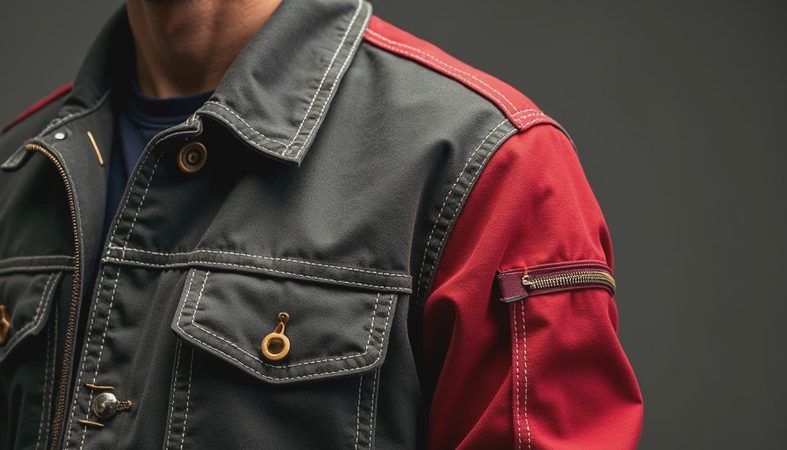
The first time I trusted a mens rain jacket on a real workday, I was halfway through a soaked brush line outside Missoula with cold water running off my sleeves and down into my gloves. That kind of day tells the truth fast. If a shell leaks at the shoulders, binds when you reach overhead, or traps sweat so bad you feel like you are wearing a garbage bag, it does not matter what the hang tag says. A decent mens rain jacket should keep rain out, move with you, and survive getting stuffed behind a truck seat, hung on a nail, or dragged through cedar and fir. That is the whole deal.
What a mens rain jacket needs on a wet job
Start with the parts that actually touch weather. The fabric needs a real waterproof membrane or coating, not just a shiny finish. The seams need tape that stays put after repeated folding, and the zipper needs a storm flap or a sealed design that does not leak at the chin. Hood shape matters more than most buyers think. If the hood blocks your side vision, blows off in wind, or fills with water at the brim, you will quit wearing it. I also want cuffs that cinch tight over gloves and a hem long enough to cover the seat of your pants when you bend over. A mens rain jacket that misses those basics is just packaging.
Breathability gets oversold, but it is still real. A cheap coated shell can keep rain out for a while and still turn your back into a sweat trap after twenty minutes of hauling gear uphill. That is why some crews like 2.5-layer fabrics for light work and others pay more for 3-layer shells that handle longer days better. If you are standing around a site all day, almost anything will feel fine. If you are cutting trail, setting forms, or working a fence line in steady rain, the difference shows up around hour three.
Fabric, construction, and where the money goes
The labels can get noisy, so cut through them. Lightweight nylon with a DWR finish sheds water until the surface treatment wears off. PVC and rubberized slickers are ugly, heavy, and not very breathable, but they are still the right call for some jobs because they do not give up fast. Patagonia, Marmot, Helly Hansen, Columbia, Carhartt, and Frogg Toggs all make shells that land in different places on that spectrum. Frogg Toggs is usually the cheap, packable option. Carhartt leans tougher and more workwear-minded. Helly Hansen has a long reputation in wet industrial work. Patagonia and Marmot often cost more, but some of their shells are built to take more abuse than the bargain rack.
A mens rain jacket is worth more when the construction matches the price. Look for clean stitching, sealed seams at stress points, and zippers that do not feel gritty on day one. If the jacket has reinforced shoulders or forearms, that is a good sign for a guy who wears a pack, carries tools, or gets in and out of trucks all day. You are not buying a fashion layer. You are buying time before wet gets through.

Fit is the difference between wearing it and fighting it
Most bad rain gear is not bad because it leaks. It is bad because it gets in the way. A mens rain jacket needs enough room for a hoodie or fleece underneath, but not so much room that it balloons in the wind like a trash bag. I like a cut that lets me reach overhead without pulling the cuffs halfway to my elbows. If you work with a hard hat or climbing helmet, check the hood before you buy. A hood that actually fits over head protection is worth more than another pocket.
Length matters too. Short jackets ride up when you crouch or climb into a truck. Too long and they snag on tool belts, truck seats, and gate latches. I want a drop tail that covers the belt line without dragging on my thighs. Adjustable cuffs and a hem drawcord help, but only if they are easy to use with cold fingers. When a jacket is built right, you stop thinking about it. That is the goal.
Price bands that make sense for real use
If you only need weather protection for a commute, a dog walk, or the occasional Saturday project, a $40 to $70 shell can make sense. It will not feel fancy, but it can keep a guy dry enough. For regular jobsite use, I think the smarter money is usually in the $90 to $160 range. That is where you start finding better zippers, stronger fabric, and hoods that do not act stupid in wind. Once you get into the $180 to $300 range, you are paying for better materials, cleaner patterning, and more time before the jacket wears out.
That does not mean expensive always wins. I have seen $250 shells fail early because the cuffs frayed, while a plain $60 jacket kept working season after season. A mens rain jacket earns its keep by staying useful after the novelty wears off. If you are going to abuse it, do not buy based on brand pride alone. Buy based on how you move, how often you get wet, and how much punishment the jacket has to take before you call it done.
What fails in the field, and what survives
The most common failure I see is a shell that is waterproof when new and disappointing after a few hard weeks. Dirt clogs the DWR, the shoulders start wetting out, and the inside feels clammy even though no seam has popped yet. The barrel does not lie. I have also seen zippers split at the bottom, cuffs fray where gloves rub, and hoods lose their shape after being crammed under a seat all summer. Those are the jobs where cheap gear starts talking back.
I do not trust any rain jacket near direct flame, engine exhaust heat, or a burn barrel. That is not what it is built for. A good shell can survive weather, brush, and jobsite abuse. It should not be confused with fire-resistant clothing. If a piece of gear claims too much and delivers too little, I would rather find out in the yard than halfway through a storm.

Maintenance and the small habits that add months
A mens rain jacket lasts longer when you treat the finish like it matters. Wash it when grime builds up, because dirt kills the water-shedding surface faster than rain does. Use a gentle detergent, skip fabric softener, and dry it the way the tag says so the DWR has a chance to revive. If water stops beading, a spray-on or wash-in treatment can buy you more season. It is not magic, but it works well enough on the shells that are worth keeping.
Store it dry. Folded wet in a truck cab, a locker, or a garage corner, it starts smelling bad and breaking down sooner. Hang it up when you get home. Check the cuffs, zipper, and hood before the next storm instead of after. That is how you get more life out of the purchase without spending another hundred bucks.
If you want one jacket to cover chores, commute, and steady weather, look for a shell that balances fit, seam quality, and real-world comfort. A mens rain jacket that checks those boxes is not a luxury piece. It is the one you will actually grab when the sky goes black. Worn in fire. Proven in dirt.