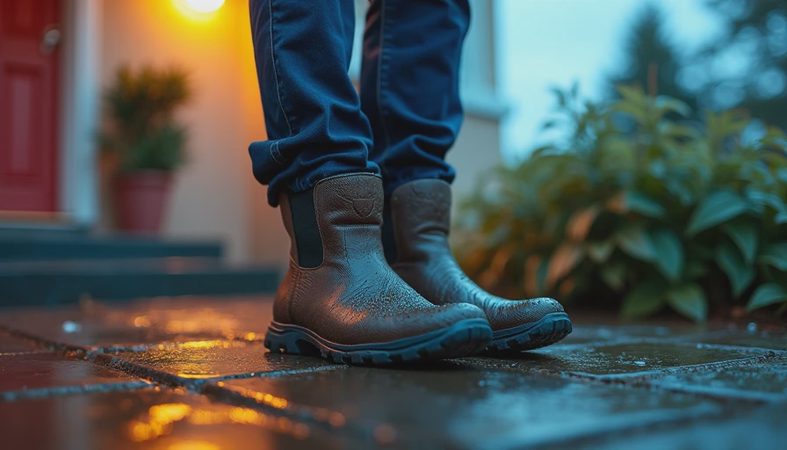
At 0530, the gravel is still hard with frost, the truck is idling, and your feet already know whether you brought the right footwear. Barefoot work shoes promise a wide toe box, flexible soles, and a closer-to-the-ground feel. That sounds useful for shop floors, trail work, warehouse shifts, and light construction. It is not automatically useful for every job. I have spent enough time in bad boots to know the difference between natural movement and a thin sole that leaves your feet cooked by lunch.
This guide is about where barefoot work shoes make sense, where they fall short, and what to inspect before spending your money. I am not treating a flexible shoe like a substitute for protective footwear. If your employer requires ASTM-rated toe protection, puncture resistance, or a defined heel, those requirements win.
What barefoot work shoes actually change
Most barefoot designs share three traits: a broad front that lets the toes spread, a low or zero-drop platform, and a flexible sole. Traditional work boots often raise the heel and taper the toe. That shape can feel supportive at first, but it may also crowd the toes during a ten-hour shift. Barefoot work shoes take away much of that structure and ask your foot, ankle, and lower leg to do more of the stabilizing.
That can feel good for someone who stands at a bench, walks between job trailers, or works on uneven ground. The sole bends when you crouch, climb a short ladder, or step over roots. A wide toe box also gives your toes room to brace instead of squeezing them together.
The adjustment is real. Start with an hour or two, not a full shift. Calves and arches can complain when they have spent years inside stiff, raised-heel footwear. Rotate them with your regular shoes for the first week. A shoe that feels wonderfully free in the living room can expose weak conditioning by mile six.

Where they earn their keep
For indoor work, barefoot work shoes can be a practical choice. Smooth concrete, shop floors, and warehouse aisles reward a flexible sole when the tread has enough rubber to resist slipping. Models from brands such as Xero Shoes, Lems, and Vivobarefoot offer different compromises in width, cushioning, and outsole design. Do not assume the most expensive pair is the toughest pair.
For trail crews and survey work, the advantage is ground feedback. You can feel whether a rock is rolling underfoot before your ankle commits. That does not mean you should use a minimalist shoe on a steep scree slope carrying a saw or heavy pack. The thin sole that gives you information also gives you less insulation from sharp rock, hot surfaces, and cold ground.
Barefoot work shoes are also useful for driving, equipment checks, and shop-to-truck jobs. Their flexible soles let you feel pedals and move naturally around a vehicle. I like that control, especially when backing a trailer or climbing in and out of a high cab. I do not like relying on them around dropped steel, chainsaw chips, or burning debris.
Safety limits you should not ignore
A wide toe box is not the same as a safety toe. If a pipe, block, or tool can land on your foot, look for actual protective certification and a construction that matches the hazard. Many minimalist shoes use thin mesh, soft leather, or flexible rubber. Those materials are comfortable, but they are not designed to stop a crushing impact.
The same warning applies to punctures. A flexible outsole may handle gravel and packed dirt while offering little defense against nails, screws, thorny brush, or scrap metal. Barefoot work shoes should not be your answer for demolition, roofing, structural steel, or any site where a puncture-resistant layer is required.
Heat is another problem. Asphalt in summer, a welding area, and equipment exhaust can turn a thin sole into a liability. Fire work is a hard no for ordinary barefoot footwear. Wildland boots need protective construction, dependable traction, and materials selected for that environment. No amount of marketing language changes that.

How to choose a pair that will last
Start with the outsole. Look for rubber that wraps enough of the shoe to protect the upper, tread that clears mud, and a bond that does not look fragile at the toe. Run your thumb across the tread. Soft rubber usually grips better on smooth floors but can wear faster on rough concrete. Harder rubber often lasts longer but can slide on wet tile or polished surfaces.
Next, check the upper and stitching. For regular outdoor work, leather or a tightly woven synthetic generally handles abrasion better than open mesh. Inspect the toe flex point. If the shoe folds sharply across a glued seam, that area may split before the outsole is worn out. A gusseted tongue helps keep dust and small stones out, though it will not turn a low shoe into a waterproof boot.
Fit matters more than the label. Measure both feet late in the day, when they are largest. Leave roughly a thumb of space ahead of the longest toe, but do not let the heel lift excessively. Try the shoes with the socks you actually wear. Heavy wool socks can change the fit by half a size, and wet socks create friction fast.
A field test before your first full shift
Give barefoot work shoes a controlled trial. Wear them around the house for thirty minutes, then walk a paved mile. Check for hot spots at the heel, little toe, and ball of the foot. Next, spend two hours on the job doing ordinary movement: kneeling, climbing a step ladder, carrying a light load, and walking across mixed surfaces.
After each test, inspect your feet and the shoe. Red skin means the fit or sock choice needs attention. A creased upper is normal; a sole peeling at the toe is not. Walk on wet pavement only when you can do so safely, and test grip with short, deliberate steps rather than pretending a slippery floor is a stunt course.
If the shoe passes, increase time gradually. A strong candidate should feel boring by the end of the day. You should notice less foot fatigue, not spend the afternoon thinking about every step. Keep a proven safety boot in the truck for tasks that exceed the shoe's protection.
The Fire Line Scale verdict
For shop work, light maintenance, driving, and walking-heavy jobs without impact hazards, barefoot work shoes land at Serviceable to Battle-Tested, depending on the outsole and upper. They can reduce toe crowding and make crouching easier. They can also wear quickly if the sole is built for casual walking rather than rough ground.
For construction sites, heavy trail work, fire lines, and jobs involving falling objects, the rating drops to Not Suitable unless the specific model meets the required safety standard. Comfort is not protection. A flexible shoe cannot replace a safety toe, puncture plate, or heat-resistant work boot when the hazard demands one.
My advice is simple: buy for the ground and hazard in front of you, not for the word barefoot on the box. Use barefoot work shoes where movement and foot space matter, break them in patiently, and keep serious protective footwear ready. The barrel does not lie, and neither does a twelve-hour shift.
Worn in fire. Proven in dirt.