Steel toed shoes make sense when your work puts your toes under threat from falling tools, rolling material, or heavy equipment. Start with your employer’s footwear requirements, then choose a pair with the right safety marking, a sole suited to your footing, and enough room to get through a shift without crushing your own toes. The steel cap protects the front of your foot; it does not make the whole shoe indestructible.
Start with the hazards, not the look
For warehouse and shop work, a low-cut safety shoe can offer easier movement than a tall boot. On rough ground, in mud, or around sharp brush, a taller boot may offer more coverage and support. Neither height guarantees ankle protection, and the right choice depends on the site and the work.
If you’re shopping for steel toed shoes, start by looking at established workwear lines from Red Wing, KEEN Utility, and Timberland PRO. Red Wing is a place to look if you want a work boot and access to in-store fitting. KEEN Utility offers options worth considering if you prefer a work-shoe style. Timberland PRO has a range of work footwear for people comparing boot and shoe styles. These are starting points, not field-test verdicts: check the individual model’s toe material and safety markings before ordering.
A safety toe is only one part of the job. A mechanic handling heavy parts may need toe protection and traction on oily floors. A construction worker walking over debris may also need puncture-resistant footwear. An electrician’s requirements can be different again. Ask what the site requires before spending your own money.
Read the safety label
Look inside the shoe for the manufacturer’s protective-footwear label. In the United States, employers commonly specify footwear meeting ASTM F2413. The label identifies the standard and the protections the particular pair meets. Check it against the requirement you were given rather than assuming every safety shoe covers every hazard.
Impact and compression ratings concern the protective toe. Other markings can indicate additional properties, such as electrical-hazard protection or puncture resistance, when applicable. A product description may use broad phrases like “work ready”; the label and the employer’s written requirements are more useful.
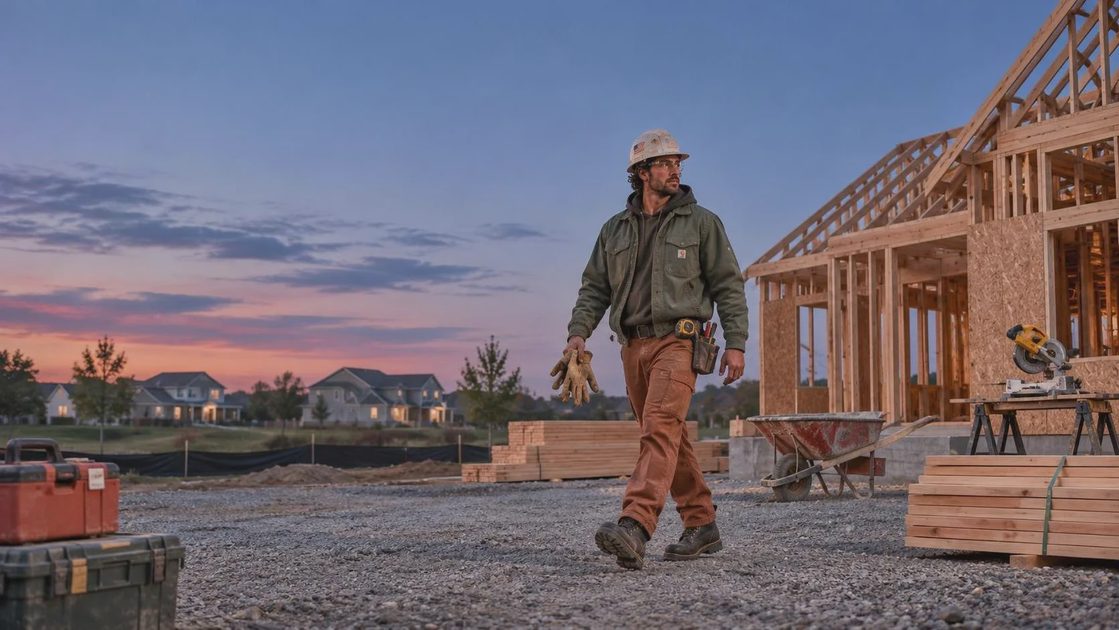
Steel toed shoes are not a substitute for guarding equipment or keeping loads under control. The cap covers the toe area, not the top of the whole foot. If the work involves a risk of material striking the instep, ask whether metatarsal protection is required. Likewise, a puncture-resistant sole is not a promise that every nail or sharp object will be stopped.
Electrical-hazard footwear also deserves a careful read. It is intended as secondary protection under specified conditions, not permission to work on energized equipment. Wear, moisture, contamination, and damage can reduce protection. Follow the job’s electrical safety procedures and the footwear maker’s instructions.
Get the fit right before the first shift
Try steel toed shoes on with the socks you actually wear to work. Stand up, walk, crouch, and go down a slope or stairs if the store allows it. Your toes should have room to move without hitting the cap, and your heel should not lift excessively with each step. The widest part of your foot should sit comfortably in the widest part of the shoe.
A steel cap will not stretch to accommodate your toes. If its edge presses on your foot in the store, don’t count on breaking it in. Try another width or a different shape. Leather and other upper materials may soften with wear, but a pressure point against the cap is a fit problem, not a character-building exercise.
Feet can swell during a long day, so trying footwear later in the day can help. If you use an orthotic or replacement insole, bring it along. Make sure it doesn’t crowd your toes or change the fit enough to make the shoe unsafe; follow the manufacturer’s guidance on replacement components.
There’s a trade-off with online orders: selection can be better, but sizes and shapes vary by model. Check the return policy and try the pair indoors before taking it to a muddy site. A bargain stops being a bargain when you’re stuck with a pair that hurts.
Match the sole to the surface
For steel toed shoes used indoors, look closely at the outsole’s stated slip resistance and the surfaces it is intended for. Oil on smooth concrete is a different problem from water on tile. No tread is slip-proof, and a worn or contaminated sole can lose grip. Clean it and replace the footwear when the tread can no longer do its job.

Outside, deeper tread can help find purchase in dirt and mud, but it can also carry mud indoors or pack up in certain conditions. A defined heel and a stable sole may matter on uneven ground or when using ladders; follow your employer’s requirements and the ladder manufacturer’s instructions. If you work on roofs, slick rock, or ice, choose footwear and traction equipment for those conditions rather than relying on a generic work sole.
Waterproofing is another trade-off. A waterproof membrane can help in wet grass and puddles, but it does not make a low shoe waterproof over the opening. It can also feel warmer than an unlined shoe. For prolonged rain or deep mud, boot height, gaiters, and dry socks may matter as much as the membrane.
Steel, composite, or soft toe?
Steel toed shoes use a metal protective cap. Composite-toe footwear uses nonmetallic materials, while soft-toe footwear has no protective safety cap. Both steel and composite models can meet applicable protective-toe standards, so the material alone doesn’t tell you whether a particular pair qualifies for your site.
Composite can be worth considering where metal detectors or cold conditions are a concern, but don’t assume every composite shoe is lighter or warmer than every steel one. The whole construction matters. Check the label and try on the actual pair. If your employer requires a safety toe, a comfortable soft-toe shoe is not a substitute.
For wildland fire, don’t assume an ordinary safety shoe meets fireline requirements. Agencies and assignments may specify boot height, construction, sole, or other features. Check the applicable agency and incident requirements before reporting. A protective toe by itself doesn’t make a shoe suitable for heat, sharp terrain, or a long line shift.
Know when a pair is done
Inspect steel toed shoes before work. Look for a separated sole, exposed toe cap, torn upper, failed stitching, or tread worn smooth. If a heavy object has struck or compressed the toe, replace the footwear even if the outside damage looks minor; the protective cap may have been compromised.
Dry wet footwear away from excessive direct heat, and follow the maker’s care instructions for cleaning and conditioning. Keep a spare pair or a plan for replacement if your livelihood depends on showing up with compliant footwear. The best time to find out a sole is coming apart is at home, not halfway through a shift.