September 2018, Sawtooth Complex, hour 11: I watched a crew member step onto a loose rock, catch himself against a skidder tire, and walk away with a bruised foot instead of a crushed one. That is where safety toe shoes earn their keep. They are not magic armor, and they will not fix bad footing, but the right pair gives your toes a fighting chance around dropped tools, lumber, steel stock, and machinery.
The problem is that the market uses “safety” loosely. A pair can look like a work shoe and still lack a tested protective toe. Before you spend $80, $150, or more, learn what the markings mean, how the footwear fits after ten hours, and where its materials stop being appropriate.
What safety toe shoes actually protect against
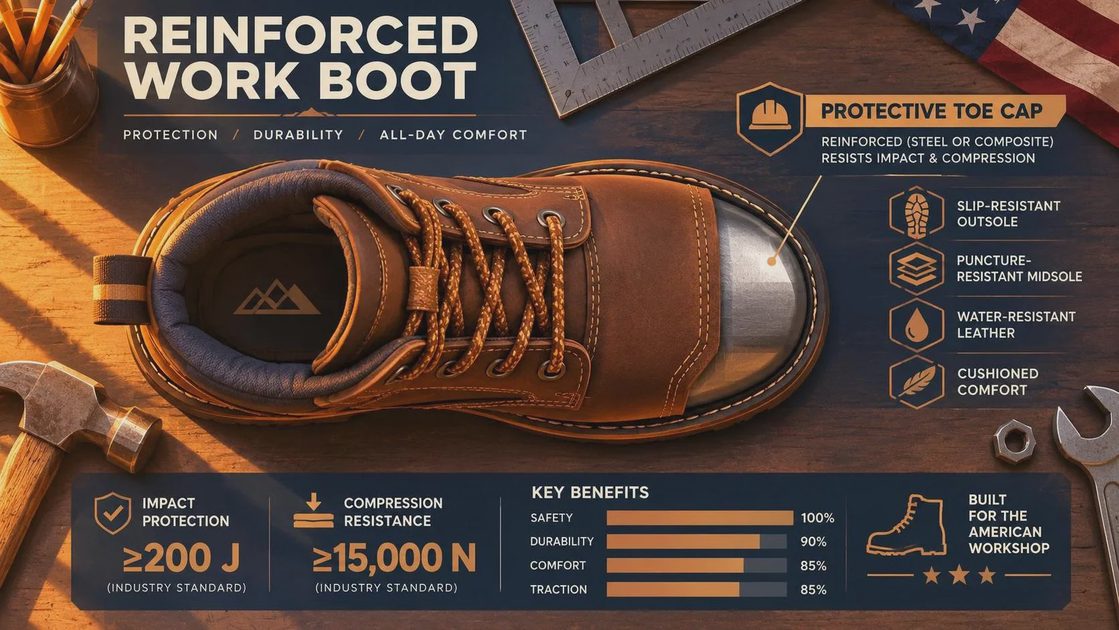
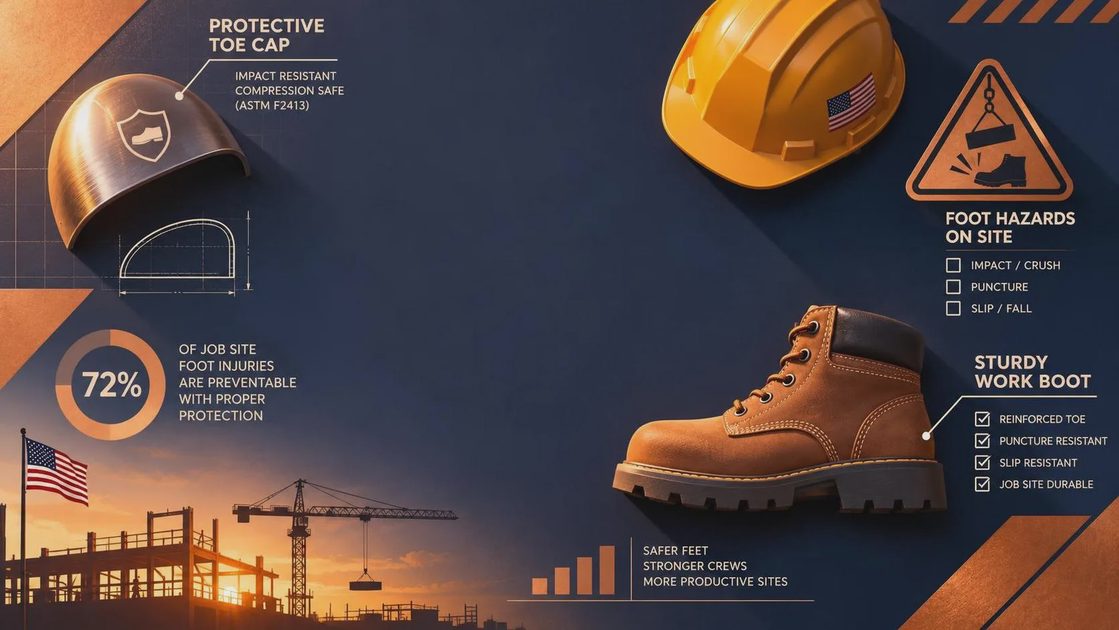
Most legitimate safety toe shoes use a toe cap tested under an ASTM F2413 protective footwear standard. That standard covers impact and compression performance, but it does not mean every shoe protects against every workplace hazard. Look inside the tongue or on the label for the manufacturer’s markings rather than trusting a rubber cap or a bold product title.
Steel toes are the familiar choice. They are durable, usually affordable, and easy to find in work shoes from brands such as Keen Utility, Wolverine, Timberland PRO, and Caterpillar. Alloy toes can provide similar protection with less weight, although they can cost more. Composite toes use materials such as carbon fiber, fiberglass, or plastic. They are useful when metal detection matters or when a driver wants less cold transfer in winter.
None of those toe materials protect the rest of your foot. A sharp nail can enter through the sole, a heavy object can land behind the cap, and a hot surface can damage the upper before the toe fails. Safety toe shoes are one layer of protection, not permission to ignore jobsite rules.
Match the rating to the work
Start by naming the hazard before choosing the shoe. A carpenter stepping over framing lumber needs impact protection and dependable traction. A warehouse worker handling pallets may need compression protection, slip resistance, and a sole that survives concrete. A utility worker around energized equipment should look for an electrical hazard rating, commonly marked EH, when the footwear is appropriate for that environment.
Puncture resistance is a separate feature. If you walk through demolition debris, ask whether the shoe has a puncture-resistant plate, often marked with a PR designation. Metatarsal protection covers more of the foot than a standard toe cap and makes sense around falling steel, heavy materials, or certain industrial machines. A toe rating alone does not promise metatarsal protection.
For outdoor utility work, safety toe shoes also need a sole with real lug depth and a heel that holds on uneven ground. Deep lugs can be excellent in mud but awkward on smooth warehouse floors. A flatter rubber compound often gives better control on concrete. There is no universal best tread; there is only the tread that matches the surface under your boots.
Fit matters more than the toe material
A safety toe should sit over your toes without touching them when you walk downhill or squat. Stand late in the day, when your feet are larger, and wear the socks you use on shift. Leave enough room to wiggle your toes, but do not let your heel lift more than a small amount. Excess movement creates hot spots, blisters, and fatigue long before the sole wears out.
Try both shoes. Feet are rarely identical, and a cap that feels fine on the left may pinch the little toe on the right. Walk stairs, kneel, and bend your ankle. If the cap presses against the top of your toes in the store, it will not improve after a week. The leather may soften, but the protective cap will not reshape around your foot.
Lacing is part of fit. A secure heel lock keeps your foot from sliding forward into the cap, while a wider forefoot can reduce pressure during long shifts. Insoles can improve comfort, but they cannot make a narrow toe box wide enough. Buy the shape that fits first, then adjust the cushioning.
Materials, heat, water, and electrical work
Leather remains a practical choice for rough work because it resists abrasion and can be conditioned. Waterproof membranes help in wet grass and rain, but they also hold heat during summer shifts and can slow drying after a creek crossing. Mesh shoes breathe better, though their uppers offer less resistance to sparks, sharp brush, and spilled chemicals.
This is where many buyers get caught by the word “work.” Safety toe shoes designed for construction are not automatically suitable for wildland fire. Synthetic panels, adhesives, and foam can soften or melt near radiant heat, embers, hot engine parts, and exhaust. A steel toe does not make a running shoe fire-resistant. For fireline work, use footwear specifically rated and designed for that job, and follow the requirements of the crew or employer.
Electrical hazard protection also has limits. It is not the same as insulated rubber equipment, and wet conditions can change the risk. Treat the marking as one part of a safety program, not a substitute for de-energizing equipment or using required protective gear.
How to judge durability before buying
Look at the stress points first. The outsole should be firmly bonded or stitched, with no visible gap around the toe. Flex the shoe where your foot bends, not through the protective cap. Check whether the lace hooks are mounted into reinforced material and whether the tongue is attached high enough to keep gravel out. A decorative seam is not the same as a structural seam.
Ask what replacement parts cost. A $110 pair that lasts nine months can be cheaper than a $190 pair that lasts two years, but only if the cheaper shoe does not leave your feet injured or wet. Many safety toe shoes fail at the heel lining, outsole bond, or waterproof membrane before the toe cap shows any damage. Take a photograph when that happens; the wear pattern tells you more than the marketing page.
Break them in gradually. Wear a new pair for two short shifts before committing to a full week. Keep the old pair in the truck, use boot-drying inserts overnight, and rotate footwear when possible. Wet foam and trapped sweat accelerate odor, lining damage, and foot problems.
A practical buying checklist
Choose the protective features from the actual hazard: ASTM-rated toe protection, puncture resistance, metatarsal coverage, slip resistance, or electrical hazard protection. Then choose the fit. Do not reverse that order because a particular color or brand is on sale.
For a concrete warehouse, I would favor a stable heel, moderate tread, and a cap that does not pinch when climbing in and out of equipment. For a muddy survey route, I would give more attention to lug shape, ankle support, waterproofing, and cleanout. For a shop, oil-resistant traction and a sole that does not mark the floor may matter more than maximum tread depth.
Price is not a reliable safety rating. Brands including Keen Utility, Red Wing, Danner, Thorogood, and Timberland PRO offer different constructions across their lines, so compare the label on the exact model. A familiar logo does not remove the need to inspect the fit and rating.
The Fire Line Scale verdict
Safety toe shoes are Acceptable when the rating matches the hazard, the cap fits without pressure, and the sole grips the surface you actually work on. They become Serviceable when the upper, outsole, and lining survive repeated wet-dry cycles without separating. Battle-Tested means you can finish a long shift without hot spots, sliding heels, or a sole packed with mud.
Barrel-Ready is a different standard. The barrel does not lie, and ordinary safety toe shoes are not built for direct flame or sustained radiant heat. Use them for the work they were designed to handle, inspect them before each shift, and replace them when the toe, sole, tread, or upper has been compromised. The best pair is not the heaviest or most expensive. It is the one that protects the right part of your foot without creating a new problem by hour eight.
Worn in fire. Proven in dirt.