Winter work boots get judged in a warm store aisle, but out on a frozen Montana ridgeline they tell the truth fast. I've spent 15 seasons on wildland fire crews and three more as a backcountry ranger in the Bitterroot, and I've learned that winter work boots have to do more than keep your toes warm. They have to keep their grip on ice, shed snow without soaking through, and survive a shift that runs from dark to dark. I've burned through cheap boots, expensive boots, waterproof boots that lied, and a few pairs that earned their spot in the work truck. Here's what actually holds up.
Before I recommend a pair, I put them through three things: a full day on icy gravel, a five-mile hike over frozen ground, and a shift standing in slush. If the leather wets out or the lugs turn slick, I don't care how good the marketing says they are. Winter work boots earn their reputation in the mud and ice, not on a website.
What Makes a Winter Work Boot Worth Your Wages
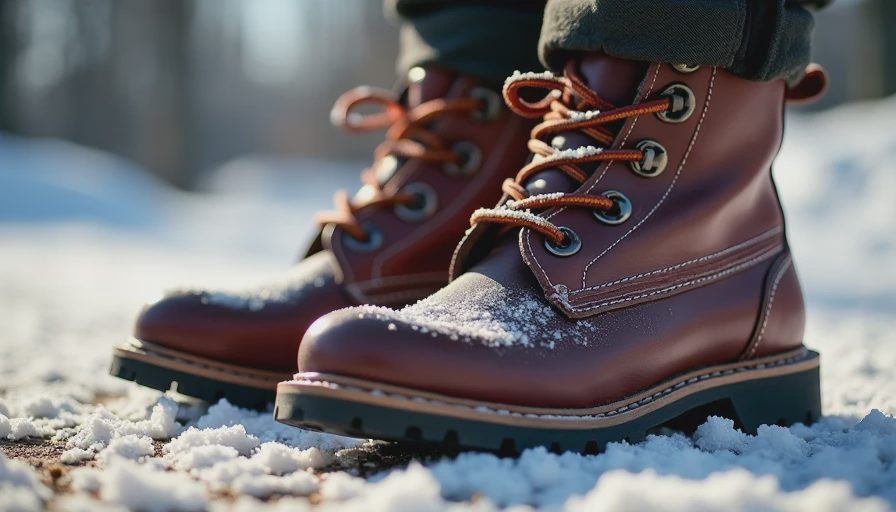
The big mistake guys make is buying a boot that's warm but has no structure. A soft, floppy winter boot feels good in the box and falls apart on a slope. You want a full-grain leather upper that sheds snow, a waterproof liner that doesn't turn into a sauna, and a sole with deep lugs that bite into frozen ground. Insulation matters, but not the way people think. Thick insulation isn't always better — 400 grams of Thinsulate in a boot with a wool sock beats 800 grams in a boot that gets packed with snow. And look at the rubber compound. Most budget boots use a hard rubber that turns into plastic in the cold. Good winter work boots use a softer compound that stays flexible down to zero or below. Check the welt too. A Goodyear welt means you can resole it later. Cemented soles are disposable.
Three Winter Work Boots I've Tested in the Field
I put three pairs through a full Montana winter: construction work, trail maintenance, and a few prescribed burns. The Danner Quarry is the closest thing to a fire-line boot that's warm enough for cold weather. Full-grain leather, 400 grams of insulation, and a Vibram sole that holds on wet rock. It's stiff for the first week, but once broken in it feels like a logger boot with a heater. If you're on your feet on concrete all day, the Red Wing Supersole 2.0 is the better pick. The sole is thick and shock-absorbing, and the waterproof liner has held up for two seasons without leaking. It runs narrow, so try a wide if you have a heavy sock. For guys who work in snow and slush all day — think ranch work or snow removal — the Muck Boot Arctic Sport is a different animal. It's a rubber boot with a fleece lining, not a leather boot, so it won't give you the same ankle support. But it's the only pair I've found that keeps your feet dry when the snow is over the top, and it doesn't need any break-in. Each of these winter work boots has a specific job. Match the boot to your work, not the other way around.
Before you buy, think about the worst conditions you'll actually work in. If you're doing long days in deep snow, a leather boot won't cut it. If you're on ladders and scaffolding, one of the leather options above will serve you better. There's no single pair that does everything.

How to Keep Your Winter Work Boots From Turning Into Ice Skates
The biggest winter enemy isn't cold — it's ice. Even the best lugs get packed with snow, and once they do, your boot becomes a sled. A few tricks keep you upright. First, pick a boot with a lug pattern that self-clears. Wide-spaced lugs with a chevron shape shed snow better than tight tread. Second, treat the sole with a rubber conditioner that keeps the compound from hardening. Third, for serious ice, add a pair of strap-on ice cleats like Kahtoola or YakTrax. They bolt onto the boot in minutes and give you carbide grip on glare ice. I keep a pair in my truck from November through March. And don't forget the laces. A boot that's tied snug is more stable than a loose one, no matter how good the sole is.
Breaking In Winter Work Boots Without a Week of Misery
Nothing kills a good boot faster than giving up during break-in. My trick: start with a thin wool sock and wear them for short shifts around the yard. The leather needs to mold to your foot, and heat softens it. After the first day, rub a bit of mink oil into the crease points. Do this for a week and the boot will feel like it was made for you. Skip the hot water and oven tricks — they dry out the leather and wreck the glue. If a winter work boot is still torturing you after two weeks, it's the wrong boot. Don't force a bad fit.
Care and Resole: Making Winter Work Boots Last
A good pair of winter work boots should last several seasons if you treat them right. Brush off the mud before it dries. Let them air out overnight — never dry wet boots on a heater. Use a waterproofing wax every few weeks, and condition the leather every month. And when the heel wears down, resole instead of replacing. A resole costs $60 to $100, a third of the price of a new pair. That's the difference between a $250 pair of boots and a $100-per-year habit.
Worn in fire. Proven in dirt.