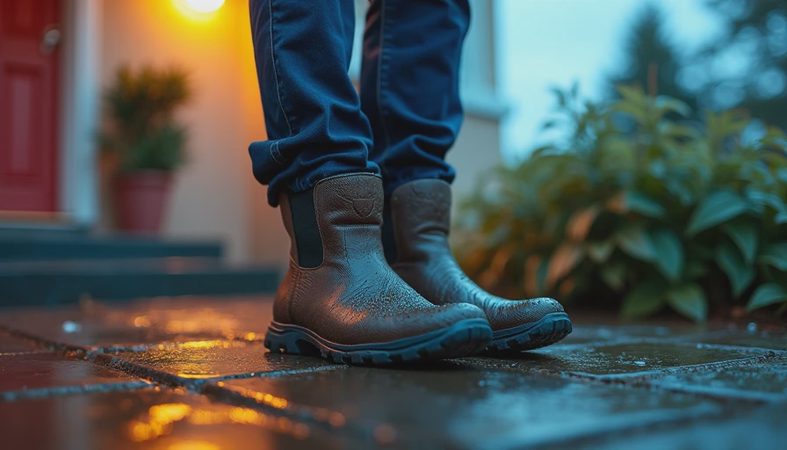
September 2018, Sawtooth Complex, hour 11. My left boot was packed with grit, my socks were damp, and every downhill step pinched across the ball of my foot. That was the day I stopped believing a boot was tough just because the leather looked thick. The right wide work boots give your toes room, hold your heel steady, and keep working after the shine is gone. That matters whether you are dragging hose, setting fence, running a saw, or spending ten hours on concrete.
Why width matters more than most boot specs
A boot can have a steel toe, a deep lug, and a price tag north of $200, yet still be wrong if the forefoot is too narrow. Your toes need space to spread when you carry weight and walk uneven ground. When they cannot, the pressure shows up as hot spots, numbness, blisters, and aching arches. A cramped toe box can also push your big toe inward, which becomes a problem long before the outsole wears out.
Good wide work boots should fit snugly through the heel and midfoot while allowing natural movement at the front. That is different from simply buying a boot one full size too long. Extra length can make your foot slide, especially on steep ground, while the toe area remains tight. Look for brands that offer genuine wide or extra-wide sizing, not just a rounded-looking standard last. Width labels differ between manufacturers, so try boots on late in the day when your feet are largest.

How to check the fit before a long shift
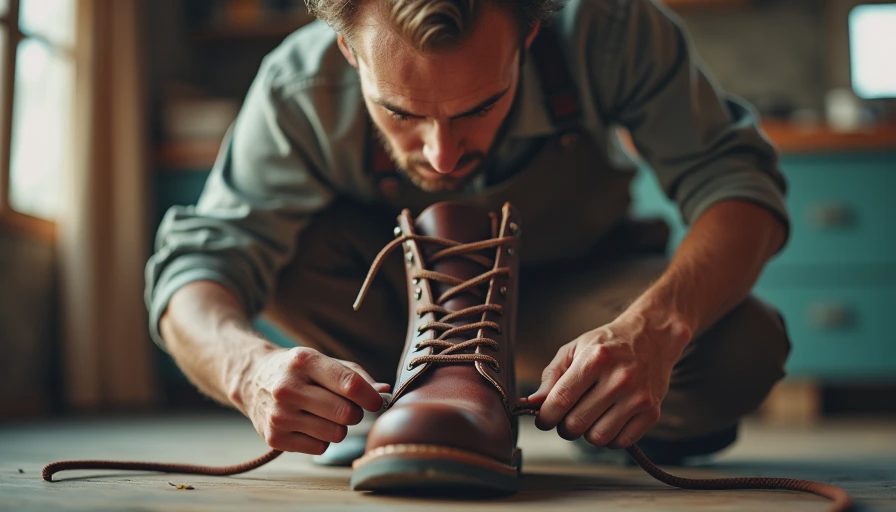
Start with the socks you actually wear at work. Thick merino socks and moisture-wicking synthetic socks take up different space, and a boot that fits barefoot can fail by lunchtime. Stand up, lace the boot firmly, and make sure your longest toe sits about a thumb's width from the front. You should be able to wiggle every toe without feeling the upper fold against your knuckles.
Walk down an incline or use a stair if the store allows it. Your heel should stay mostly planted, with no sharp pressure over the instep. Then kneel and squat. The boot should flex at the ball of your foot instead of bending across your toes. For wide work boots, this test catches problems that a few steps on a flat floor will hide.
Do not assume discomfort is part of the break-in process. Leather can soften, but it will not create an extra half-inch of usable width. A stiff boot that supports your foot is normal. Burning, tingling, or a numb little toe is a fit warning.
Materials and construction worth paying for
Full-grain leather remains a practical choice for hard outdoor work because it resists abrasion and can be conditioned after exposure to dust, mud, and light rain. It is not waterproof by itself. A waterproof membrane can help in wet grass or snow, but it also reduces breathability and can make drying slower. If your work involves creek crossings, choose a boot with a gusseted tongue and sealed construction, then bring a second pair of socks.
Pay attention to the welt or direct-attach construction. A stitched welt can often be repaired or resoled, which is useful when the upper still has life. Direct-attach soles can seal well against water and feel lighter, but replacement options are more limited. The outsole should match the ground: moderate lugs for mixed job sites, deeper lugs for soil and rock, and a flatter slip-resistant pattern for smooth indoor floors.
For wide work boots, the upper must be wide as well as the platform. A broad outsole does not help if the leather tapers sharply above it. Press the sides with your thumb. The material should wrap your foot without squeezing it or leaving large empty pockets.
Steel toe, composite toe, or soft toe?
Toe protection depends on the hazard, not personal preference alone. Steel toes are durable and usually cost less, but they can feel cold in winter and add weight. Composite toes weigh less and do not conduct cold as readily, which helps on long outdoor shifts. They can also take more room in certain designs. A soft-toe boot is lighter and more flexible, but it is not a substitute for protective footwear where falling or rolling objects are a real risk.
Check the safety marking and the fit around the protective cap. Your toes should not touch the cap when standing, walking downhill, or climbing a ladder. A wide boot with a narrow toe cap is still a narrow boot where it matters. Models from Keen Utility, Thorogood, Red Wing, Danner, and Carolina commonly include different width options, but each line uses its own shape. Treat the label as a starting point, not a guarantee.
Comparing price against actual service life
A $90 pair can be the right answer for occasional shop work, especially if the outsole and stitching are sound. For daily construction, utility, or trail work, spending $150 to $260 often buys better leather, stronger shanks, more stable heels, and repairable construction. That only pays off if the boot fits. A badly shaped $240 boot is an expensive injury to your feet.
Keep receipts and inspect the boots after every first week. Look for sole separation, crushed heel counters, broken eyelets, and creases that press into your toes. If a pair is already causing numbness after three shifts, stop trying to win an argument with the boot. Return it under the retailer's policy and start over. Wide work boots should reduce fatigue, not require you to tolerate it for the sake of a brand name.
Breaking in and maintaining the pair
Wear new boots around the house and on short errands before taking them to a twelve-hour shift. Increase time gradually over three or four days. Clean dirt with a brush, let the leather dry away from direct heat, and apply conditioner sparingly. Saturating leather can soften support and encourage stretching in the wrong places.
Rotate footwear when your schedule allows. Even one day of rest gives damp liners a chance to dry. Replace worn insoles if the upper and outsole remain solid, but do not use an insole to solve a boot that is fundamentally too narrow. Laces should hold the heel without cutting circulation across the instep.
My field verdict
The best wide work boots are not the biggest-looking boots on the shelf. They are the pair that lets your toes spread, keeps your heel controlled, and stays predictable when the ground turns steep, wet, or full of broken rock. Start with the correct width, confirm the toe protection you need, and judge construction against the hours you actually work.
On the Fire Line Scale, a well-fitted pair with a stable heel, durable upper, and replaceable or trustworthy sole earns Battle-Tested. A bargain pair that pinches by lunch gets marked Serviceable at best, no matter how good the online photographs look. The barrel doesn't lie, and neither do your feet after hour ten. Worn in fire. Proven in dirt.