September 2018, Sawtooth Complex, hour 11, and my firefighter boots were the only thing between me and a scree slope that wanted to take my ankles. That's when I stopped trusting marketing copy and started trusting the gear that survived the season. After 15 years on federal wildland fire crews and three more as a backcountry ranger in the Bitterroot, I've put more pairs of firefighter boots through the barrel than I can count. This guide is about what actually holds up when the temperature climbs and the ground turns to ash.
What Actually Matters in Firefighter Boots
Most guys ask about leather thickness or lug depth first. Those matter, but they're not the whole story. The first thing I check is the welt construction. A Goodyear welt or stitchdown means the sole can be replaced. That's the difference between a $300 boot that lasts five seasons and a $250 boot that's trash after one. Firefighter boots need a shank — steel or composite — because you're going to be standing on a roof or a slope where the ground doesn't give. And the leather should be full-grain, not the corrected stuff that looks pretty in the catalog and delaminates after a month.
The second thing is the outsole. Vibram is the standard for a reason: great heat resistance and traction. But not all Vibram is the same. The Fire & Ice compound is different from the standard lug sole, and it'll hold up better on hot asphalt and steep, loose dirt. I've also tested boots with the older heel-and-arch design that wildland crews have worn for decades, and there's a reason it's still around: it gives you a solid platform for carrying a saw or a hose pack.
Let me be direct: if a boot doesn't have a replaceable sole and a full-grain upper, it's not a firefighter boot. It's a costume. The barrel doesn't lie — I've burned enough cheap boots to know what melts and what just gets dirty.
The Boots That Made It Through Three Seasons
I'm not going to recommend a single pair because feet are different and budgets are different. But I can tell you what I've worn and what my crews wore.
The Whites Firestorm is the classic wildland boot, full-grain leather, stitchdown construction, and a sole that takes a beating. It's also $400-plus, so if you're on a rookie's wage, that's a hard swallow. The Drew's and Nick's boots are similar — handmade in the Pacific Northwest, built to last a decade. I've seen engine bosses swear by them.
If you're on a budget, the Haix Fire Hero is a legitimate option. It's a structural boot, but I've worn it on the line too, and the composite toe and puncture-resistant midsole make it a solid all-around choice. It's lighter than the leather lace-ups, but the sole is glued, not stitched, so don't expect to resole it. At $250 and change, you'll get two decent seasons.
Then there's the classic firefighter boot that everyone tries once: the rubber overshoe from companies like Servus. They're cheap, about $60, and waterproof. But they have zero ankle support and they turn your feet into sweatbags by noon. They have their place in the engine bay, but not on a 10-mile hike with a chainsaw.
How to Break In Your New Boots Without Ruining Your Feet
The biggest mistake rookies make is showing up with brand-new boots and expecting to hit the line the next day. You need at least two weeks of daily wear. I tell my crews to start with thin wool socks, not the thick ones, and to lace tight at the ankle but loose at the toe. Use a boot conditioner on the leather every two or three wears. And when the boots get wet, dry them slowly — no fire, no heater vent. That's how leather cracks and the welt pulls.
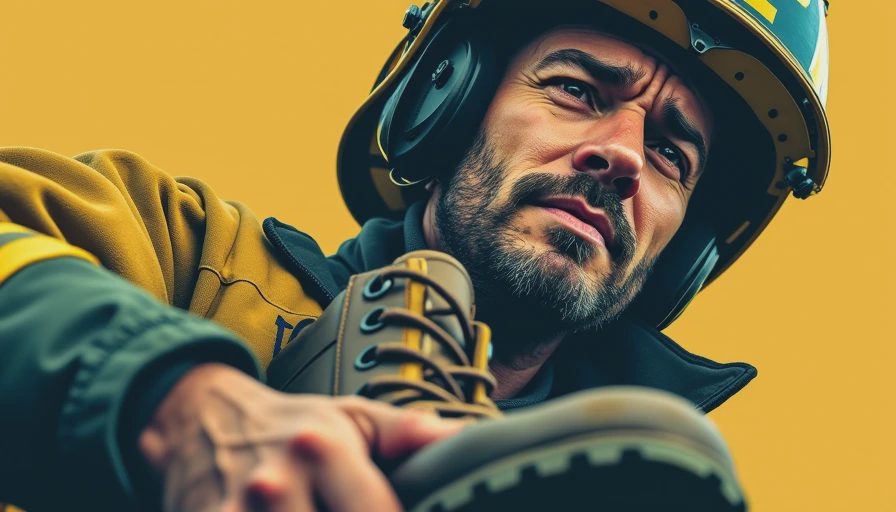
A good trick is to wear them around camp for a few hours a day, then do a short hike with a loaded pack. The goal is to soften the leather at the flex points without blowing out your heels. If the boot doesn't mold to your foot after thirty miles, it's either the wrong size or the wrong last. Don't buy a size up and hope they shrink — they don't.
Stretching Your Boot Budget: When Cheap Is Fine
Not everyone can drop $400 on a pair of Whites. And that's okay. What matters is that you buy the best construction you can afford and you replace insoles when they flatten. A $100 boot with a $20 aftermarket insole will outperform a $250 boot with a concrete factory insole. Look for sales at the end of fire season, usually September and October, when supply stores are clearing stock. I've seen firefighter boots marked down thirty percent at local outfitters.
But here's the line I won't cross: if a boot has a nylon upper and a glued sole, it's not for the fire line. It might be great for lawn work, but it won't hold up to a raking line in rocky soil. Spend the money where it counts — your feet are what carry you off the mountain.
The Bottom Line
After years of field tests and burn barrel inspections, my rule is simple: buy the best construction you can afford, break them in properly, and take care of the leather. A good pair of firefighter boots will last five to seven seasons if you don't abuse them. The barrel doesn't lie — cheap boots burn fast, and good boots stand their ground.
Worn in fire. Proven in dirt.