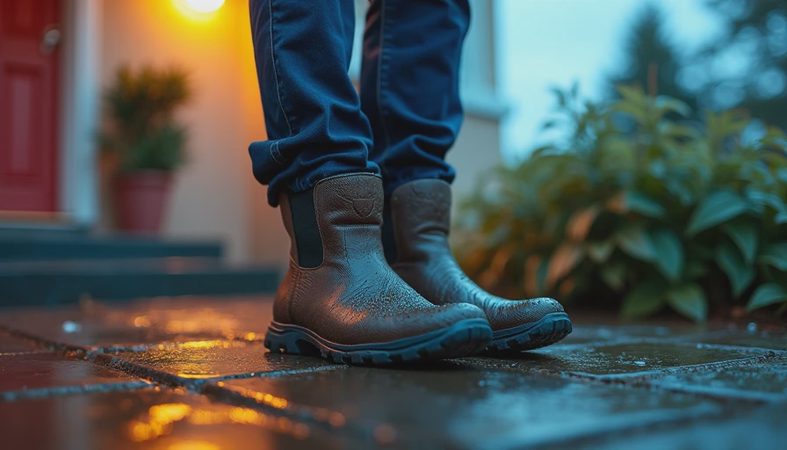
September 2018, Sawtooth Complex, hour 11: my left boot was full of grit, the toe was scarred from dragging a saw, and the sole was starting to separate at the heel. That pair looked tough in the store. It was not tough enough for the work. The right utility work boots keep your feet planted, dry enough to finish the shift, and comfortable after miles of walking. The wrong pair turns every ladder, truck step, and rocky slope into a small injury.
I have worn boots across fire roads, trail projects, ranch ground, and construction sites. Here is what matters when you need utility work boots for more than a clean trip to the hardware store.
Start With the Work, Not the Brand
A lineman, concrete finisher, trail worker, and equipment operator do not need the same boot. Start by writing down the ground and hazards you face most often. Mud and standing water call for waterproof construction and a lugged outsole. Asphalt and warehouse floors usually reward a flatter, more flexible sole. Climbing ladders puts extra pressure on the shank and heel. Brush work demands abrasion resistance around the toe and ankle.
If you spend the day near live electrical systems, look for boots labeled with the appropriate electrical hazard protection and follow your employer's safety requirements. That feature does not make a boot waterproof or puncture resistant. Those are separate properties. A steel toe protects against impact and compression, while a composite toe is lighter and does not conduct heat or cold as quickly. Neither one replaces careful footing.
Brand names narrow the search, but they do not finish it. Thorogood, Red Wing, Danner, Keen Utility, Ariat, and Timberland PRO all make useful models, yet each line includes boots with different lasts, soles, and construction. Your feet decide more than the logo.
Fit Is the First Safety Feature
Try utility work boots late in the day, when your feet have expanded from walking. Wear the socks you actually use on shift. Your toes should move without touching the front, but your heel should not lift more than a small amount when you walk. Too much room creates blisters and makes ladder work unstable. Too little room turns a downhill section into a bruised toenail.
Lace the boot firmly over the instep and leave enough room to flex at the ball of your foot. If the boot pinches across the widest part, do not assume it will stretch into comfort. Leather can relax slightly; it will not change a bad shape into a good one. Try a wide version before sizing up. Going longer to gain width lets your foot slide and can create hot spots under the heel.
Walk on a hard floor, climb a few steps, and squat. Check whether the tongue folds, whether the ankle collar rubs, and whether your toes stay planted. A useful pair should feel boring during this test. You should notice secure support, not pressure points.
Leather, Waterproofing, and Heat
Full-grain leather remains a strong choice for utility work boots because it handles abrasion and can be conditioned repeatedly. It also needs maintenance. Brush off dried mud, let the boot dry naturally, and use a conditioner suited to the leather. Do not bake wet boots beside a heater; high heat can stiffen leather, damage adhesives, and shrink the fit.
Waterproof membranes help in wet grass, snow, and short crossings, but they are not magic. Water can enter over the collar, through damaged stitching, or from a soaked pant leg. A waterproof boot can also run warmer than a non-waterproof model. In a July excavation trench, breathable leather with good socks may feel better than a sealed membrane.
For fireline or hot industrial work, do not treat ordinary utility work boots as wildland fire boots. Heat, melted synthetic components, and poor sole compounds can create a serious failure. Check the job standard first. The barrel does not lie, and neither does a burned outsole.
Soles That Match the Ground
The outsole is where a good boot earns its keep. Deep lugs bite loose soil, but they can feel awkward on smooth concrete and collect mud. A wedge sole offers steady contact on floors, packed dirt, and pavement, though it is not my first choice for steep, loose slopes. A defined heel helps on ladders and uneven ground. A flat, flexible sole can be better for driving and indoor work.
Look closely at the stitching, welt, and bond between the midsole and outsole. Small gaps at the edge are not cosmetic once water and grit start working inside. Replacement soles can extend the life of a quality boot, but resoling only makes financial sense when the upper, lining, and structure are still sound. A $220 boot with a replaceable sole can beat two $100 pairs that fail in one season.
Rotate pairs when possible. Giving boots a full day to dry reduces odor, softens the interior, and lets you spot damage before it becomes a missed shift.

Toe Protection and Daily Comfort
Steel toe utility work boots remain common because they are durable and often less expensive. Composite toes reduce weight and can feel more comfortable in cold conditions. Aluminum toes provide another lighter option. The correct choice depends on the hazards, required certification, and the temperature of your worksite.
Do not judge safety by how bulky the toe looks. A roomy safety toe can still rub if the last is wrong. Check the internal shape with your actual socks. Then examine the insole. A removable footbed lets you replace worn cushioning or use an approved insert, but extra thickness can reduce usable toe room. Support should come from the boot's structure and a sensible footbed, not from stuffing foam under a cramped foot.
I also pay attention to the collar. Padded collars reduce pressure during long walking shifts, while tall rigid shafts offer more ankle coverage but can restrict movement. For utility crews covering six to twelve miles, the best boot is the one that protects without making every step expensive.
A Practical Buying Checklist
Before buying utility work boots, check the following in order:
- Confirm the job's required safety rating and toe type.
- Match the outsole to your main surface: mud, rock, pavement, or concrete.
- Measure both feet and fit the larger foot.
- Test the boot with work socks late in the day.
- Inspect heel hold, toe room, tongue pressure, and ankle movement.
- Ask whether the outsole can be replaced and whether parts are available.
- Budget for quality socks, because cotton worn wet will punish even excellent boots.
A sensible price range is roughly $120 to $250 for a dependable daily pair. Some premium models cost more, but price alone does not prove durability. A $280 boot that causes heel blisters is a poor tool. A $150 pair that fits, dries overnight, and holds its sole through a season is money well spent.
My Fire Line Scale
For general outdoor and trade use, I rate utility work boots as Acceptable when they fit correctly and survive ordinary shifts, Serviceable when they add reliable traction and protection, Battle-Tested when the leather and sole remain sound after months of wet, abrasive work, and Barrel-Ready when every major component earns trust under abuse.
My advice is simple: buy for the ground beneath you, not the picture on the box. Break boots in before the hard job, carry spare socks, and inspect the sole whenever you wash off mud. If the heel starts separating or the toe protection shifts, retire the pair before a small defect becomes a fall.
The best utility work boots do not need a sales pitch after a long shift. They need to come off dirty, intact, and ready for tomorrow. Worn in fire. Proven in dirt.