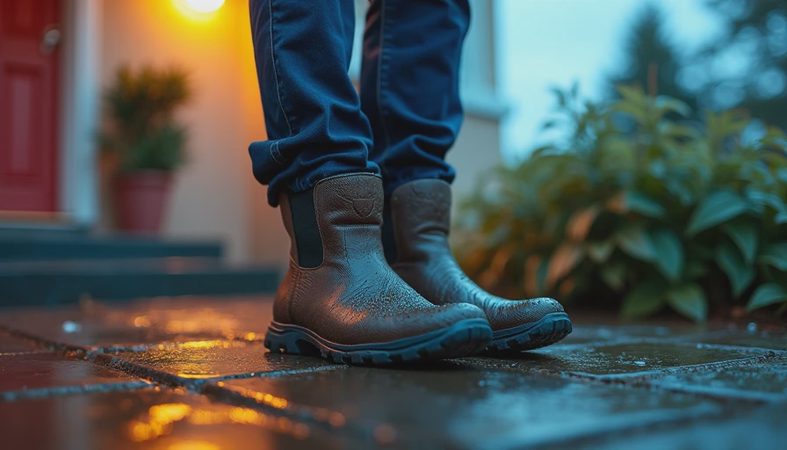
September 2018, Sawtooth Complex, hour 11. My feet were hot, swollen, and boxed into a pair of boots that claimed to fit a wide foot. They did not. By the end of that shift, my little toes were numb and every downhill step felt like somebody had driven a wedge under my toenails. That is why finding mens work boots wide width is not a style exercise. It is a safety and endurance problem. A boot that squeezes your forefoot will change your stride, create blisters, and make a long shift harder than it needs to be.
The right pair should hold your heel without clamping your toes. It should leave enough room for your foot to spread when you carry a saw, climb a ladder, or walk ten miles of uneven ground. I have worn plenty of boots that looked tough on a shelf and failed after three shifts. The barrel does not lie, and neither do swollen feet.
Start With the Shape of Your Foot
Width letters are not perfectly standardized. A D width is usually considered standard for men, while EE, 2E, and 4E indicate progressively wider fits. One brand's 2E can feel similar to another brand's 4E, so the label is only the first checkpoint. The actual shape of the toe box matters just as much.
Measure both feet at the end of the day, when they are largest. Wear the socks you use for work, stand with your weight evenly distributed, and measure from the longest toe to the back of the heel. Trace the widest part of each foot as well. If one foot is larger, fit the boot to that foot and use a quality insole or a small heel pad to fine-tune the other side.
When trying mens work boots wide width, check the bend point. The boot should flex where your toes meet your foot, not in the middle of the arch. Your toes should wiggle freely without touching the roof of the toe box. Leave roughly a thumb's width in front of your longest toe, especially if you work on slopes where your foot slides forward.

A roomy toe box does not mean a loose boot. Lace the lower eyelets firmly across the forefoot, then snug the upper laces around the ankle. Walk down a ramp or a flight of stairs. If your heel lifts more than about a quarter inch, try a different last, thicker socks, or a heel-lock lacing pattern. Persistent heel slip means the boot is wrong, not that your foot needs to suffer through a break-in period.
Materials and Safety Features That Matter
Leather remains a reliable choice for construction, ranch, utility, and trail work because it resists abrasion and can be conditioned. Full-grain leather usually offers better durability than thin corrected leather, but it also takes longer to break in. A waterproof membrane can help in wet grass and shallow mud, though it will not turn a boot into a rubber wader. Waterproof boots can also run warmer, which matters during summer concrete work.
For mens work boots wide width on active job sites, decide what protection you actually need. A composite toe is lighter and does not conduct cold as readily as steel, while a steel toe has a long track record and often costs less. Electrical hazard ratings are designed for specific conditions and are not a promise that a boot makes every electrical task safe. Slip-resistant soles help on smooth floors, but no tread replaces careful footing around oil, ice, or loose gravel.
Look closely at the outsole and welt. A stitched or welted construction can often be resoled, while many cemented boots are lighter and more flexible but less economical to rebuild. Vibram outsoles appear on many serious work boots, but the logo alone does not tell you whether the compound is right for hot pavement, wet rock, or oily shop floors. Read the use rating and inspect the tread depth.
Brands and Models Worth Trying
Several established brands offer useful wide sizes, but each has a different feel. Keen Utility often gives a broad, comfortable toe shape, making it a reasonable starting point for workers whose toes feel pinched in traditional boots. Thorogood moc-toe boots are popular with concrete and shop workers because their wedge soles feel stable on hard floors, though the tread is not ideal for deep mud.
Red Wing carries multiple width options and has repair infrastructure in many areas, but its sizing process deserves patience. Do not order blindly because the boot costs more. Danner offers work and outdoor models with supportive lasts; some fit broad while others feel narrow through the forefoot. Carolina, Georgia Boot, and Wolverine also produce wide offerings across different price points.
The best mens work boots wide width are not automatically the most expensive. A $150 to $230 boot that fits correctly can serve better than a $300 pair that pinches your toes. Bring your current work insoles to the store, try both boots, and spend at least ten minutes walking. If an online purchase is your only option, use a retailer with free returns and buy two adjacent widths when the budget allows.

Break-In Without Wrecking Your Feet
Do not take a new pair straight into a 12-hour shift. Wear them around the house for an hour, then use them for a short walk on level ground. After two or three sessions, wear them for a half shift with spare socks in your truck. Pay attention to hot spots before they become blisters.
Leather conditioner can soften stiff panels, but flooding the boot with oil can weaken adhesives, darken leather, and reduce breathability. Never use a boot dryer that blasts high heat against leather or glue. Remove the insoles after wet shifts, loosen the laces, and let the boots dry at room temperature. Rotate pairs when possible; a full day of drying is better than sealing sweat inside the lining.
For wide-footed workers, lacing is part of the fit. Skip an eyelet directly over a pressure point and use a heel-lock loop at the top. If your toes go numb, stop. Numbness is not a normal break-in sensation. It is evidence that the boot is compressing nerves or restricting circulation.
A Field Check Before You Commit
Before buying mens work boots wide width, write down the conditions you face. Concrete finishers need cushion and slip resistance. Linemen need climbing compatibility and firm ankle support. Trail crews need traction, weather protection, and a sole that will not fold under a loaded pack. Wildland work adds heat, ash, and long mileage; a general soft-toe work boot may not meet the requirements of a particular crew or task.
Check the return policy, safety certification, and replacement parts before paying. Look at the stitching around the toe, the bond between midsole and outsole, and the tongue gussets. Flex both boots by hand. Cracking leather, uneven welt stitching, or a sole that separates from light pressure are reasons to walk away.
After the first week, inspect your feet and the boot together. A clean wear pattern and dry skin are good signs. Red marks across the toes, a collapsing heel counter, or heavy wear on one edge can point to a poor fit or gait problem. Spend the money where the evidence is: width, support, traction, and a construction you can maintain.
The Fire Line Scale
For most workers, I rate a properly fitted pair as Serviceable before the first long shift and Battle-Tested after it has handled wet ground, hard floors, and several miles without hot spots. The label does not earn that rating. Your feet do.
If you need mens work boots wide width, start with measurements, not a brand name. Try the widest practical toe shape, confirm the safety features for your job, and return any boot that causes numbness during a short walk. A good boot should disappear into the work. You should notice the mud, the gravel, and the long day—not the pressure across your toes.
Worn in fire. Proven in dirt.