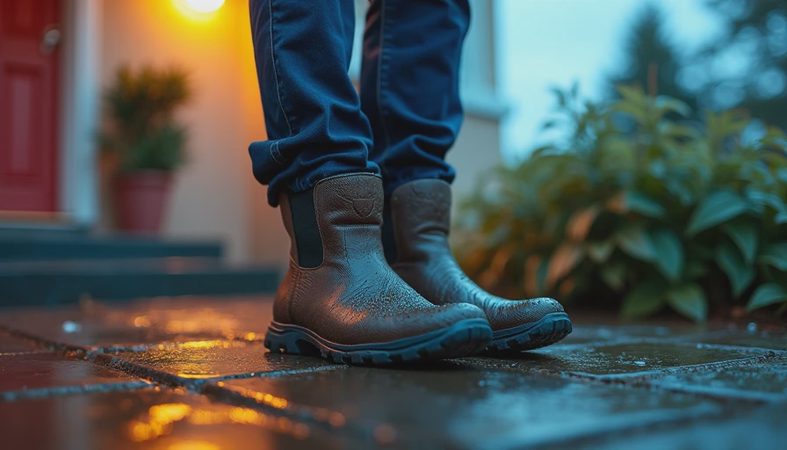
September 2018, hour 11 on the Sawtooth Complex, my left foot was numb from the ball back to the heel. The boots were good leather, good stitching, and completely wrong for my feet. That is the problem with shopping for extra extra wide work boots: a boot can look tough on the shelf while crushing your toes by lunch.
I have spent enough seasons walking fire roads, slash, rock, and wet trail to learn that width is not a comfort detail. It affects balance, blistering, knee fatigue, and how securely your foot stays over the sole. The right pair gives your toes room without letting your heel swim. The wrong pair turns a ten-hour shift into a slow injury.
What extra extra wide really means
Manufacturers do not use one universal measurement for width. A 4E from one brand can feel narrower than a 3E from another, and some work boots list widths as EEE, 4E, 6E, or simply “extra wide.” Those labels are useful starting points, not guarantees.
Measure both feet at the end of the day while wearing the socks used on shift. Stand on paper, trace each foot, and measure the widest point across the forefoot. Measure length from heel to longest toe. If one foot is larger, fit the larger foot. A boot should leave roughly a thumb’s width in front of the longest toe, but the more important test is whether your little toe touches the sidewall when you stand and bend your knees.
For extra extra wide work boots, look for a genuinely broad toe box rather than a narrow boot stretched into a wider size. A rounded or anatomical toe usually gives more usable room than a sharply tapered safety toe. Pull the laces tight over the instep, walk downhill, and stop if your toes slam forward. That test catches fit problems that a carpeted store floor hides.

Safety toe shape matters more than the label
A safety toe must protect without becoming a steel vise. Steel toes are familiar, durable, and often less expensive, but they can feel rigid across a broad forefoot. Composite toes are lighter and do not conduct cold as readily, although the cap still has to match your foot shape. Aluminum toes offer a thinner protective profile in some designs, but brand construction and certification matter more than the material name alone.
Look for ASTM-rated protective footwear when your job requires impact and compression protection. That rating does not tell you whether the boot is comfortable, waterproof, or wide enough. It tells you the toe protection passed specific tests. You still need to check the internal shape.
Try boots with your foot pushed forward until your toes touch the cap. Then slide your heel back and lace normally. Your toes should be able to wiggle and lift slightly without rubbing the roof of the toe box. If the sides of the cap press into your smallest toes, sizing up is rarely a real fix. It adds length while leaving the same cramped shape.
Features that earn their place on a work shift
The best extra extra wide work boots combine room with a stable platform. A flat, supportive insole can help a driver or warehouse worker who spends hours on concrete, while a firmer shank helps on uneven ground. Removable footbeds are useful because they let you replace a worn insole without throwing away a sound boot.
For wet jobs, separate waterproofing from water resistance. A waterproof membrane can keep out standing water, but it can also hold heat and sweat. Full-grain leather with a gusseted tongue may handle puddles well when treated regularly. No boot stays waterproof after deep creases, damaged stitching, or a worn collar, so inspect those areas after every muddy week.
Outsoles should match the surface. A lugged Vibram-style sole gives bite in loose dirt and trail debris, but aggressive lugs can feel clumsy on smooth concrete. A flatter wedge sole is quiet and stable on shop floors, yet it sheds mud poorly. For utility work, a heel edge can help on ladders; for long trail miles, excessive heel lift can increase fatigue. Buy for the ground you actually walk, not the toughest-looking catalog photo.

How to compare brands and prices
Extra extra wide work boots commonly run from about $120 to $300, with premium rebuildable models going higher. A $160 pair that fits on day one is cheaper than a $90 pair that causes blisters, lost shifts, and a replacement purchase before the season ends. Brands such as Keen Utility, New Balance Work, Thorogood, Carolina, and Dunham offer different approaches to broad sizing, but model-level fit matters more than the logo.
Keen Utility often uses a roomier anatomical toe shape, which can suit workers who need space around the front of the foot. New Balance Work brings familiar athletic-shoe sizing to some safety-toe models. Thorogood and Carolina offer traditional leather work boots, though their widest options vary by model. Do not assume a brand’s regular extra-wide listing will fit like another brand’s 6E.
Order from a seller with a clear return policy, and test indoors first. Wear your work socks for 20 minutes. Climb stairs, kneel, squat, and walk on a firm surface. Check for side pressure, heel lift, and creasing directly under your toes. A small amount of heel movement is normal in new leather boots; slipping that creates a hot spot is not.
Break-in, maintenance, and the barrel test
Do not break in new boots on a ten-hour shift. Wear them around the house for an hour, then use them for short errands or a two-hour shop session. Thick socks can protect your skin, but they cannot create missing width. If the boot already pinches after 30 minutes, more wear will not magically reshape the safety toe.
Brush off grit after each shift and let the boots dry at room temperature. Do not put leather directly beside a woodstove or heater; rapid drying can stiffen and crack it. Replace insoles when they flatten, and inspect the welt, toe cap, eyelets, and outsole edge every few weeks. A loose stitch is a repair opportunity. A separated sole during a remote shift is a problem.
My test is simple: can I stand, climb, kneel, and walk a rough mile without thinking about my feet? Extra extra wide work boots that pass that test earn a place in the truck. The barrel does not lie, but neither does a numb toe or a blister under a hot spot.
A field checklist before you buy
Start with the job hazard assessment. If you need a safety toe, electrical hazard protection, slip resistance, or waterproofing, confirm the actual marking on the boot instead of relying on an online headline. Then measure both feet late in the day and compare those numbers with the manufacturer’s chart.
Next, identify where your current boots fail. If your toes hit the cap, seek a wider toe shape. If your heel lifts, look for better lacing or a different heel counter. If your arch aches on concrete, prioritize the footbed and midsole. If the outsole packs with mud, choose a tread designed to release dirt.
Finally, budget for socks and replacement insoles. Merino-blend work socks can manage moisture better than cheap cotton, while a supportive insole can change the feel of an otherwise solid boot. Buy the fit first, the feature list second, and the brand name last.
That is the short briefing: wide means usable room, not just a larger number stamped on the box. Walk before you commit, inspect the safety toe, match the sole to your surface, and give the leather a sensible break-in. On the Fire Line Scale, a pair that stays comfortable through a full shift is Battle-Tested. The rest belongs back on the shelf.
Worn in fire. Proven in dirt.