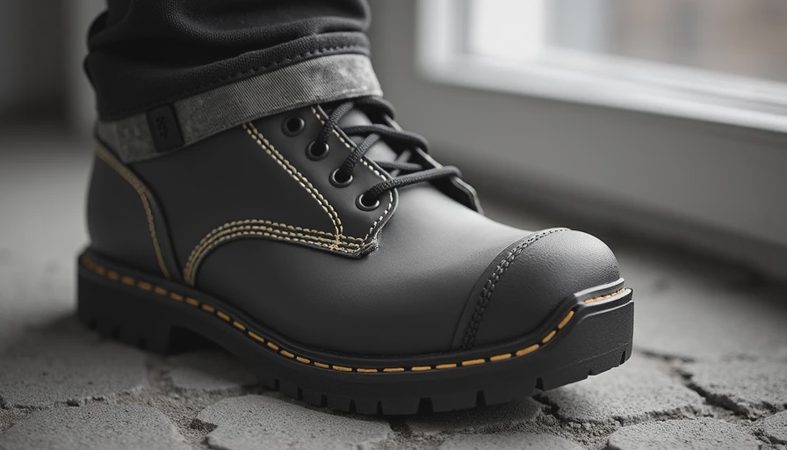
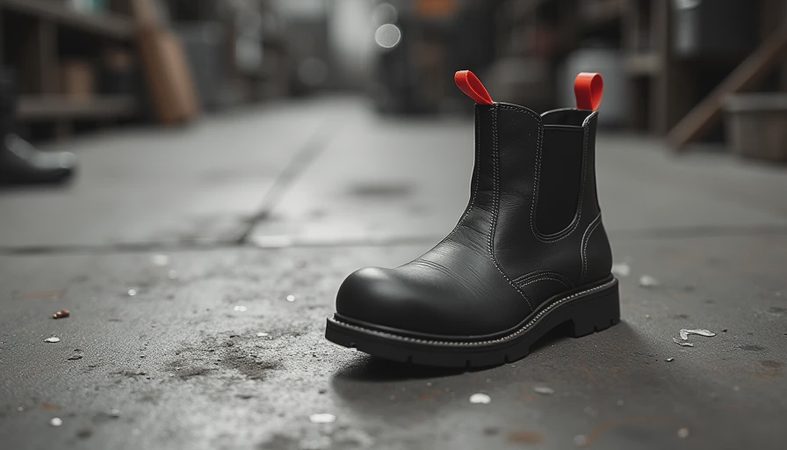
September 2018, Sawtooth Complex, hour 11: I was stepping over a charred log when a loose rock rolled under my right boot. Nothing broke, but the impact reminded me why toe protection is not a place to trust marketing copy. The steel toe vs composite toe question comes down to your worksite, weather, and tolerance for weight. Both can protect your toes, but they behave differently under pressure.
A safety toe is not the same thing as a steel cap added to an ordinary boot. Work boots are tested against impact and compression requirements, commonly under ASTM F2413 in the United States. Look for the actual safety marking inside the boot or on its label. A familiar logo, rugged stitching, or a thick sole does not prove the toe meets a workplace requirement.
Steel Toe vs Composite Toe: What Changes?
Steel toes use a shaped steel shell over the front of the foot. The material has been used for decades because it is strong, relatively affordable, and easy for manufacturers to fit into many boot designs. A quality steel toe can handle serious impact from tools, lumber, pipe, or equipment when the boot is properly rated and maintained.
Composite toes use nonmetal materials such as fiberglass, carbon fiber, Kevlar, or reinforced plastic. The exact blend depends on the manufacturer. They are usually lighter than steel and do not conduct cold as quickly. That difference matters when you spend ten hours outside in January, climb ladders repeatedly, or walk several miles between work areas.
The steel toe vs composite toe decision is not a contest with one universal winner. A warehouse worker, electrician, concrete finisher, and wildland trail worker face different hazards. Start with the required safety rating, then compare weight, temperature, clearance, and fit.
Protection, Weight, and Daily Fatigue
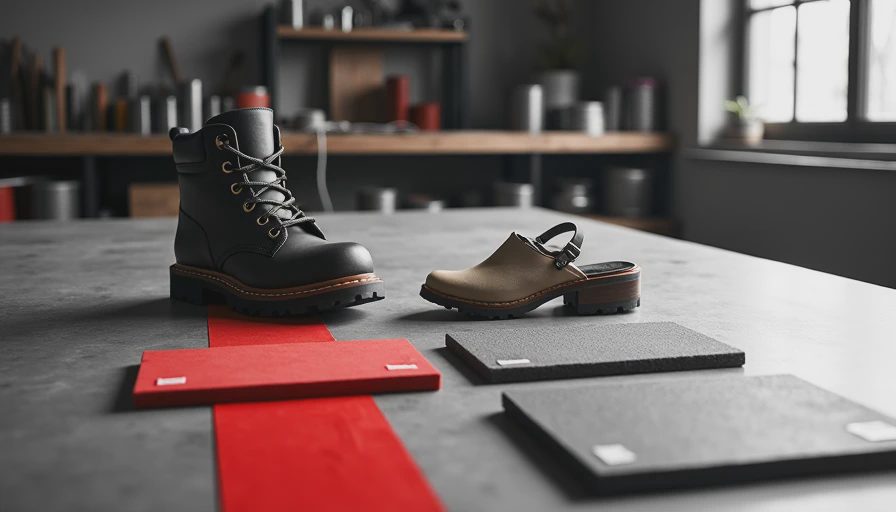
Steel has one straightforward advantage: it is dense and tough. In many boots, that translates to a slimmer protective cap with good resistance to crushing forces. The tradeoff is weight. A pair of steel-toe boots can add several ounces per foot compared with a similar composite model. That does not sound like much at a boot counter, but after 12,000 steps it becomes part of every stride.
Composite toes often feel easier on long shifts because they weigh less. The difference is especially noticeable on stairs, ladders, and uneven ground. They also do not set off many metal detectors, which helps some airport, utility, and secure-facility workers. Still, composite is not automatically stronger, and a light boot is not automatically comfortable. Poorly shaped safety caps can press against the big toe or leave too little room above the foot.
With steel toe vs composite toe, inspect the whole boot rather than the cap alone. A protective toe cannot compensate for a soft heel counter, a flat insole, or a sole that slips on wet concrete. Walk on a hard floor, flex the boot, and check whether your toes can move without touching the cap.
Cold, Heat, and Electrical Concerns
Cold is where composite often earns its keep. Steel transfers outdoor temperatures more readily, so a steel cap can feel icy during a Montana pre-dawn start. Thick socks help, but they also take up room and can create pressure points. Composite is not warm by itself, yet it generally feels less cold against the foot during long winter exposure.
Heat requires more careful thinking. Neither toe type makes a boot fireproof. Leather, adhesives, insulation, laces, and outsoles can fail long before the toe cap does. On a fire line, I care about the entire boot system, not a single line on a product page. Do not use ordinary safety-toe boots for wildland fire unless they meet the specific requirements of that assignment.
Some composite materials are marketed as nonmetallic or nonconductive, but that does not mean the boot is electrically rated. If electrical hazard protection matters, look for the appropriate marking and follow the job site's rules. The steel toe vs composite toe choice should never replace a proper electrical-hazard rating or employer guidance.
Fit Is More Important Than the Label
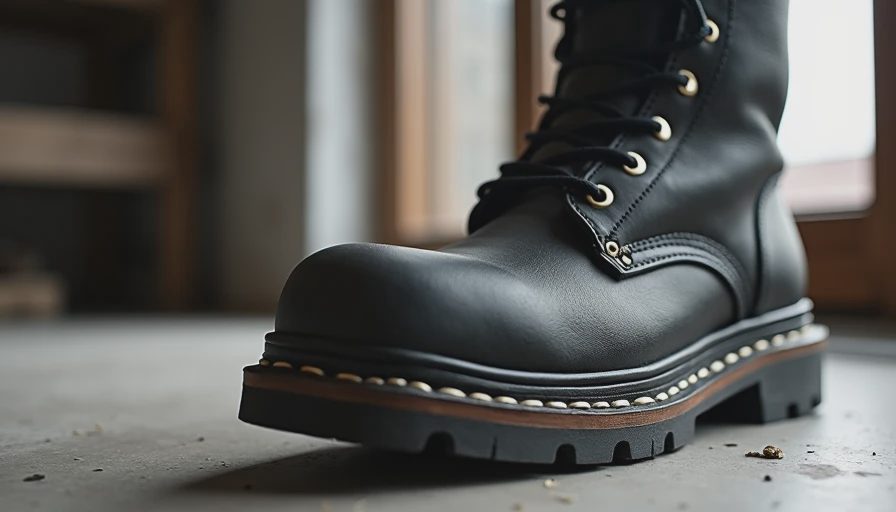
I have worn expensive boots that failed at the fit before the outsole showed a scratch. The toe cap shape did not match my foot, so my smallest toes went numb by lunch. A cheaper boot with a wider, better-shaped cap would have been the smarter purchase.
Try boots at the end of the day, when feet are slightly larger. Wear the socks used on the job. Your heel should stay planted while walking, your toes should not hit the front on a downhill step, and the cap should not squeeze from the sides. Leave enough room for normal swelling without allowing your foot to slide forward.
Different brands build different toe shapes. Red Wing, Keen Utility, Thorogood, Danner, and Timberland PRO all offer safety-toe designs, but their lasts are not interchangeable. One brand's wide may feel like another brand's regular. In the steel toe vs composite toe debate, shape and volume often matter more than the material printed on the box.
Cost, Durability, and Replacement Timing
Basic steel-toe boots commonly start around $80 to $130, while well-built work boots often run from $150 to $300. Composite models frequently cost $120 to $300, with premium waterproof or insulated versions going higher. The extra price can reflect lighter materials, insulation, waterproof construction, or simply a brand name. It does not guarantee longer life.
Inspect the outsole, welt, stitching, and interior lining every week. Replace boots when the sole is badly worn, the upper separates, the safety toe becomes exposed or deformed, or the boot no longer supports your foot. A damaged cap is not a character mark. It is a reason to stop trusting the boot.
Steel toe vs composite toe costs should be judged over a season, not at checkout. A $210 pair worn comfortably for 18 months can be cheaper than a $110 pair that causes blisters and needs replacement after four months. Keep receipts and check the manufacturer's care instructions, especially for waterproof membranes and glued construction.
Which One Should You Buy?
Choose steel when you want a proven, usually lower-cost option, work around heavy materials, and do not spend long hours in severe cold. It is a practical choice for construction, manufacturing, warehouse work, and many general trades. Select composite when lower weight, winter comfort, or a nonmetallic design matters more. It can suit electricians, utility workers, airport crews, and anyone walking all day.
Before buying, run this short field check:
- Confirm the safety rating required by the employer or jobsite.
- Decide whether cold exposure or repeated climbing makes lower weight valuable.
- Try both boots with work socks and test heel hold.
- Check toe clearance, width, waterproofing, and outsole traction.
- Compare the full price with expected service life, not the sale sticker.
The best steel toe vs composite toe answer is the boot you can wear through a full shift without pain while still meeting the hazard in front of you. Steel remains the straightforward workhorse. Composite saves weight and conducts less cold. Neither one forgives a bad fit or careless inspection.
On the Fire Line Scale, both are Serviceable when correctly rated and properly fitted. The barrel does not lie, and neither does a numb foot at hour ten. Buy for the ground you actually work on, not the photo on the box. Worn in fire. Proven in dirt.