September 2018, Sawtooth Complex, hour 11. My feet were hot, my lower back was tight, and every step across the engine bay felt like somebody had driven a nail through my heel. That shift taught me what the best shoes for standing on concrete all day need to do: spread impact, hold the foot steady, and stay comfortable after the morning cushioning has flattened.
Concrete is unforgiving. It does not flex under your stride, absorb vibration, or give your knees a break. Whether you work in a warehouse, machine shop, hospital, grocery store, or fire station, the wrong pair can turn an ordinary shift into a slow injury. I have spent enough time in boots and work shoes to know that price alone does not solve the problem. Construction, fit, midsole foam, outsole grip, and moisture control matter more.
What makes a shoe work on concrete
Start with the midsole. EVA foam is light and comfortable, but inexpensive foam can compress quickly under a heavier worker or during 10-hour shifts. Polyurethane midsoles usually feel firmer and hold their shape longer, though they can add weight. Some shoes combine both materials, using EVA for cushioning and a denser foam near the heel for support.
Look for a heel that feels cushioned without feeling unstable. A soft, sinking heel can force your calf and Achilles tendon to work harder. The best shoes for standing on concrete all day usually have moderate cushioning, a broad platform, and enough torsional stiffness that the shoe does not fold when you twist or step sideways.
The upper matters too. Leather handles abrasion and shop grime well, while engineered mesh breathes better during hot indoor work. If your job involves oil, water, sparks, or dropped tools, choose protection first. A slip-resistant rubber outsole, reinforced toe, and electrical hazard rating can be more important than saving a few ounces.
My practical picks by type of work
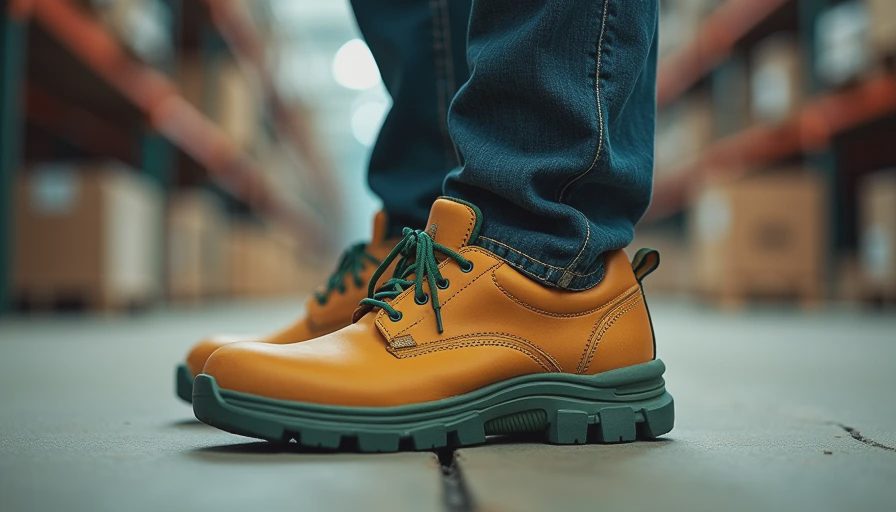
For warehouse and factory floors, the New Balance 589v1 is a sensible starting point. It has a work-shoe build, a protective toe option, and a sole designed for traction rather than sidewalk fashion. It is not the lightest shoe on this list, but a stable platform is useful when you are moving pallets or standing at a station for hours.
For healthcare, retail, or light-duty service work, the Skechers Work Arch Fit line offers a softer feel and a wider range of fits. The comfort is useful for repeated walking on concrete, but inspect the outsole regularly if you work around grease or wet tile. Soft comfort does not automatically equal dependable grip.
For trades that need a boot, the Keen Utility Cincinnati or Red Wing Traction Tred Lite are stronger choices than a casual sneaker. The Keen has a roomy toe box that suits many wider feet, while the Red Wing gives you a durable leather upper and a replaceable-boot mindset. Neither is cheap. A realistic budget is roughly $130 to $260, but replacing a pair every six months because the midsole collapsed is not a bargain.
The best shoes for standing on concrete all day should match the hazard, not just the pain in your feet. A cushioned running shoe is a poor choice around welding sparks. A heavy logger boot is unnecessary for a clean warehouse. Buy for the floor, the shift length, and the consequences of a slip.
Fit is where most comfort problems start
Measure both feet near the end of the day, when they are slightly swollen. Wear the socks you use at work. You should have about a thumb-width of room beyond the longest toe, but your heel should not lift dramatically when you walk. Excess space creates sliding, and sliding creates hot spots and blisters.
Do not assume a wide shoe fixes every foot problem. A wide toe box helps spread the toes, but the heel and arch still need to fit. If your foot is narrow, use a better insole or try a narrower last rather than cinching the laces until the upper wrinkles.
Break new work shoes in before a full shift. Wear them for two or three short sessions, then check your heel, the ball of your foot, and the area below your big toe. A pressure mark that appears after 30 minutes will become a serious problem after nine hours.
Insoles, socks, and rotation
A good insole can rescue an average work shoe, but it cannot repair a collapsed midsole. Superfeet Green offers firm support for workers who prefer structure, while Dr. Scholl's Work Massaging Gel feels softer and costs less. Replace insoles when they flatten, develop a permanent heel cup, or stop reducing fatigue.
Use socks with cushioning under the heel and forefoot, not thick cotton tubes that stay wet. Merino blends manage moisture and odor well, although synthetic work socks are often cheaper and dry faster. Change socks halfway through a long shift if your feet sweat heavily. That small habit reduces friction more effectively than adding another layer of foam.
If possible, rotate two pairs. Let one pair dry and decompress while you wear the other. I have gotten more usable life from work footwear this way than by buying one expensive pair and wearing it into the ground. Keep shoes away from direct heater blasts; high heat can harden leather, damage adhesives, and distort foam.
A simple test before you spend money
Stand in the shoes for 10 minutes on a hard floor. Then walk, climb stairs, and make several side steps. Your heel should stay planted, your toes should spread naturally, and your arch should feel supported rather than stabbed. Bend the shoe at the forefoot. It should flex where your toes bend, not collapse through the middle.
Check the outsole pattern. Deep tread is not always better indoors; some aggressive designs collect debris and squeak on smooth floors. Look for rubber that contacts the ground across the heel and forefoot. If the shoe twists like a towel, it will not give you much support during a long stationary shift.
Inspect the return policy before ordering online. Feet change between brands, and a shoe that felt fine for five minutes may fail after an hour. The best shoes for standing on concrete all day are the ones you can actually wear without pressure points, heel slip, or numb toes.
When to replace your work shoes
Do not wait for a hole. Replace the pair when the outsole is worn smooth, the heel leans outward, or the midsole stays compressed after you remove your foot. Uneven wear can change your gait and push stress into your knees, hips, and lower back.
A basic pair around $70 can work for light use, while serious safety footwear often lands between $120 and $250. The right purchase is the pair that remains stable and comfortable through your real shift. Marketing claims do not carry a tired crew home; construction does.
My Fire Line Scale rating for a properly fitted, slip-resistant work shoe with durable cushioning is Serviceable to Battle-Tested, depending on the hazard. Choose carefully, break it in early, and replace it before the sole becomes a liability. Worn in fire. Proven in dirt.