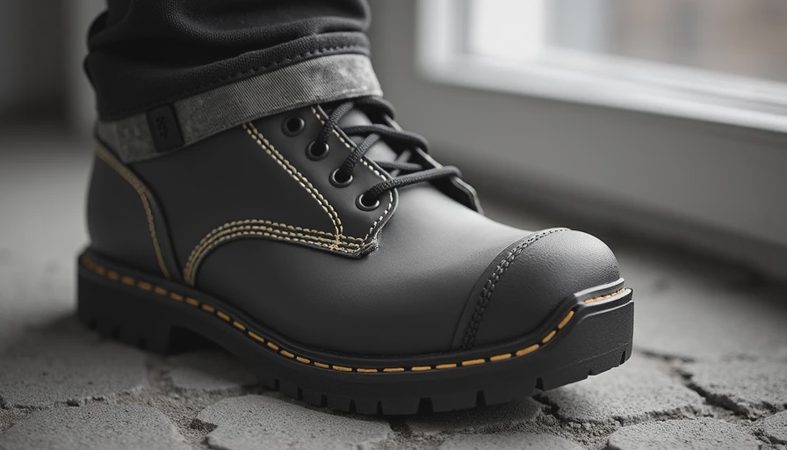
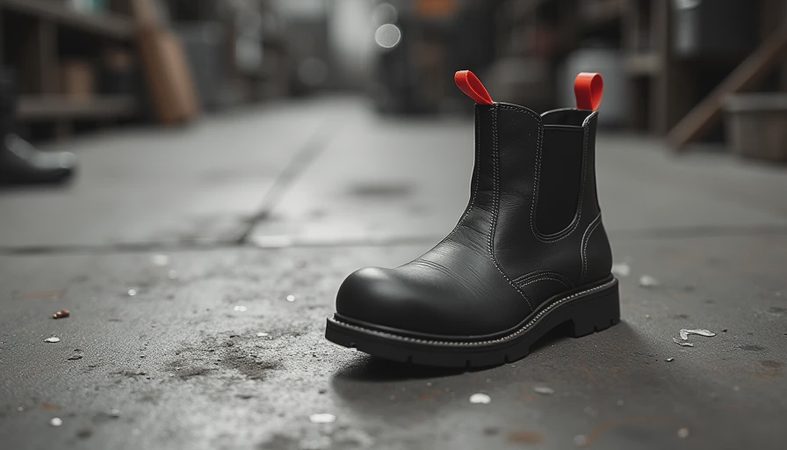
September 2018, Sawtooth Complex, hour 11. My boots were packed with ash, my socks were damp, and every step across a blackened slope found another sharp rock. That is the sort of ground where irish setter boots by red wing shoes earn a fair look. They are not polished-office footwear. They are work boots built around practical protection, all-day support, and the kind of rough use that exposes weak stitching quickly.
Irish Setter is a Red Wing brand, but these boots are not simply Red Wing Heritage boots with a different badge. The line focuses on work, hunting, logging, and outdoor utility. Depending on the model, you will find leather uppers, steel or composite safety toes, electrical hazard protection, waterproof membranes, aggressive rubber outsoles, and insulation. The important question is not whether a boot looks tough on a product page. It is whether the exact model matches your ground, weather, and daily hazards.
What the Irish Setter line does well
The strongest part of irish setter boots by red wing shoes is the range. Irish Setter offers lighter wedge-style work boots for concrete and shop floors, tall hunting boots for wet brush, and heavier-duty models for uneven terrain. That gives a worker more useful choices than a single all-purpose boot pretending to handle everything.
Leather quality is generally solid for the price tier. Full-grain uppers can take scuffs from ladder rungs, truck beds, and rocky trails, then improve with brushing and conditioning. The boots often feel stiff out of the box, especially in tall or insulated versions. That is not automatically a flaw. A stiff boot can protect your foot and hold its shape, but it needs a real break-in period before a long shift.
The soles are another practical strength. Lugged outsoles provide useful purchase in loose soil, pine needles, and wet gravel. They are less pleasant on smooth concrete than a flatter wedge sole, where deep lugs can feel clumsy and collect mud. Match the tread to the job instead of assuming the most aggressive pattern is the safest choice.

Choosing the right model and safety package
When comparing irish setter boots by red wing shoes, start with the hazard rather than the color or height. A construction worker around dropped tools should look at a safety toe. Steel toes are proven and usually cost less, while composite toes weigh less and do not conduct cold as readily. Neither option makes a boot indestructible, and the toe rating applies to the protective cap, not the whole foot.
For wet job sites, a waterproof membrane can keep out puddles and short exposure to rain. It will not turn a boot into a rubber wader, especially when water enters over the collar. Waterproof boots also tend to run warmer. If you work in a hot mill, warehouse, or dry summer range, a breathable non-waterproof boot may leave your feet in better shape at quitting time.
Electrical hazard protection is useful for certain work environments, but it is not permission to ignore site procedures or treat footwear as insulation against every electrical risk. Likewise, a puncture-resistant plate helps against nails and sharp debris but does not replace careful footing. Read the label on the exact model; features vary across the line.
Fit, break-in, and the first week
A good fit starts with the socks you actually wear. Try boots late in the day, when feet have expanded, and wear the same wool or synthetic work socks used on shift. Your heel should stay planted when walking downhill. Your toes should not touch the front when descending stairs. If you need to cinch the laces so tightly that your foot tingles, the boot is probably too wide, too large, or shaped wrong for you.
Many irish setter boots by red wing shoes use substantial leather that softens after several workdays rather than several hours. Start with short walks and ordinary shifts. Do not make the first outing a 12-hour concrete pour or a 10-mile patrol. A hot spot on day one becomes a blister by mile eight. Carry moleskin, change socks if they become soaked, and loosen the laces during breaks to let your feet cool.
For sizing, do not assume your sneaker size transfers directly. Work-boot lasts differ, and safety toes can change the available space at the front. A local boot store is worth the trip when possible. Fifteen minutes of fitting can prevent a $150 to $250 mistake and weeks of foot pain.
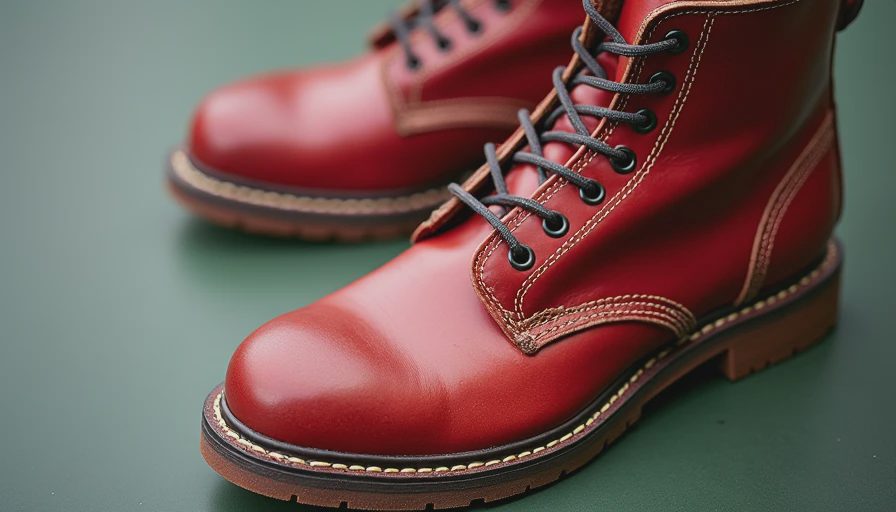
Durability in mud, dust, and hard use
The barrel does not lie, but a controlled burn is not a useful test for ordinary work boots. Leather, rubber, adhesives, and waterproof membranes all have limits around flame and high heat. Do not use irish setter boots by red wing shoes as wildfire PPE unless the model and your employer specifically approve them for that purpose. For fireline work, footwear requirements can include specialized leather, height, soles, and construction that a general work boot may not meet.
In normal use, durability comes down to maintenance. Knock off dried mud before it hardens around the welt and eyelets. Let wet boots dry at room temperature, away from a heater or stove. Remove the insoles and use newspaper when the interior is soaked. Once the leather is dry, apply a conditioner suited to the boot finish. Heavy oil can soften leather too much and may reduce the boot's original breathability or change its color.
Inspect the outsole, stitching, and toe cap every few weeks. A small separation can often be repaired before water reaches the foot. Waiting until the sole flaps on a ladder turns a minor repair into a replacement. Resole options depend on the construction and the condition of the upper, so keep the receipt and ask a reputable repair shop before the boot is worn through.
Price, value, and alternatives
Most Irish Setter work and hunting boots sit in a midrange price bracket, commonly around $140 to $250 depending on insulation, safety features, height, and sales. That is cheaper than many premium work boots, but price alone does not make them a bargain. A boot that fits badly costs more than a boot that lasts another season.
Irish setter boots by red wing shoes compete with models from Thorogood, Wolverine, Keen Utility, Danner, and Red Wing's own work line. Thorogood wedge boots are popular with workers who spend most of the day on concrete. Keen Utility often appeals to people who want a roomier safety toe. Danner offers several serious outdoor and work options, often at a higher price. The right comparison is outsole, toe protection, fit, warranty support, and repairability—not the logo stamped on the tongue.
For a worker getting 18 to 24 months from a pair used five days a week, a $200 boot can make sense if it prevents lost shifts and foot trouble. For occasional property work, a less expensive boot may be enough. Buy the job, not the fantasy version of the job.
My field verdict
irish setter boots by red wing shoes land in the Serviceable to Battle-Tested range, depending on the model and how honestly it is matched to the work. They offer useful protection, respectable leather, and enough variety to serve contractors, hunters, trail crews, and ranch workers. They are not a substitute for specialized fire boots, and no waterproof membrane forgives neglect.
Before ordering, write down your work surface, wet-weather exposure, toe requirement, daily mileage, and winter temperature. Then choose the lightest boot that handles those conditions without giving up protection. Break it in gradually, maintain the leather, and watch the sole before it becomes a safety problem. That is how irish setter boots by red wing shoes become dependable tools instead of another pair abandoned beside the back door.
Worn in fire. Proven in dirt.